

Soil Termite Treatment in Mesa: Cost, Process, Lifespan
A termite treatment soil barrier, also called a soil termite treatment, is a liquid termiticide applied to the ground around and under your home. Subterranean termites travel through that soil to reach your wood, so treating it stops them at the source. A basic exterior treatment typically runs $330 to $820 on published averages, and a professionally applied barrier lasts about 5 to 7 years.
This article explains why soil treatment matters for Mesa homes, how a technician applies it step by step, what it costs, and how long it lasts. It also covers how to choose a company to do the work. You will finish knowing what a fair quote includes and which questions to ask before you sign.
Polite Pest Co. is a family-owned company in Mesa with more than a decade in pest control, and termite control is one of our core services. The advice below reflects how this work is done on homes in the Mesa area, so you can use it whether you hire us or another licensed company.
Why soil treatment matters for Mesa homes
Soil treatment matters because subterranean termites nest in the ground, and treated soil is where you can cut an entire colony off from your house. A patch of damage is usually one end of a tunnel system that runs through the dirt around your foundation.
How termites reach a slab home
Most Mesa homes sit on concrete slabs, and termites do not need a big opening to get in. They squeeze through expansion joints, plumbing penetrations, and hairline cracks , then climb inside walls or behind stucco with no mud tube in sight.
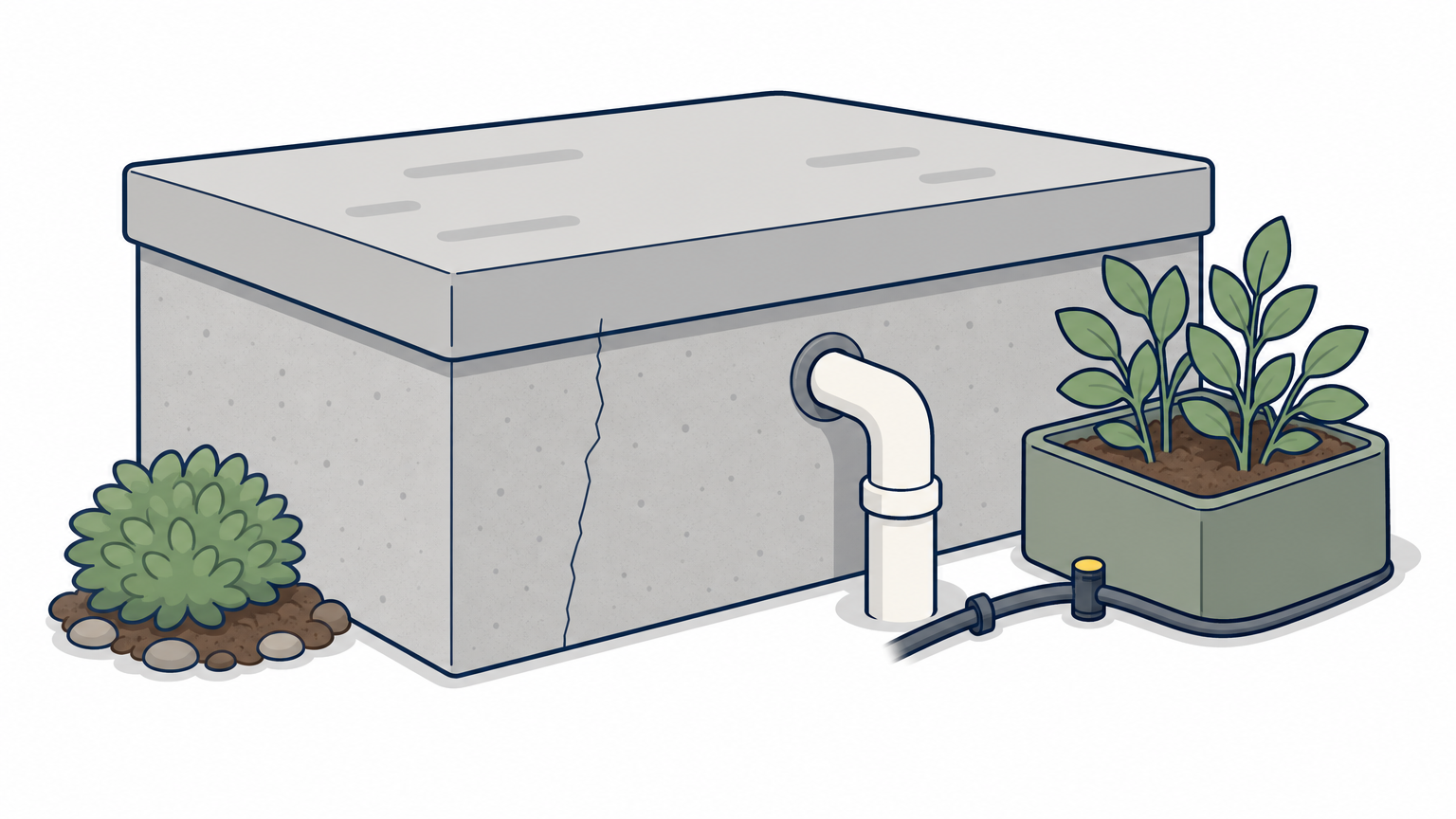
Desert subterranean termites are common across the Phoenix area. Irrigation lines, planters against the wall, and slow plumbing leaks give them the moisture they need to keep tunneling toward wood.
When a soil barrier makes sense
A soil barrier is the right call in several situations:
- You have found mud tubes, swarmer wings, or hollow-sounding wood.
- A technician confirmed active termites during an inspection.
- Your last professional treatment is more than 5 to 7 years old.
- You are buying or building a home and want protection in place before activity starts.
Spot treatments kill the termites you can reach. A soil barrier covers the full perimeter, so it also protects entry points nobody can see . Many homeowners pair it with a termite inspection first, so the treatment targets real conditions instead of guesses.
Termites live in the soil, so the soil is where you stop them.
How a technician applies a soil termite treatment
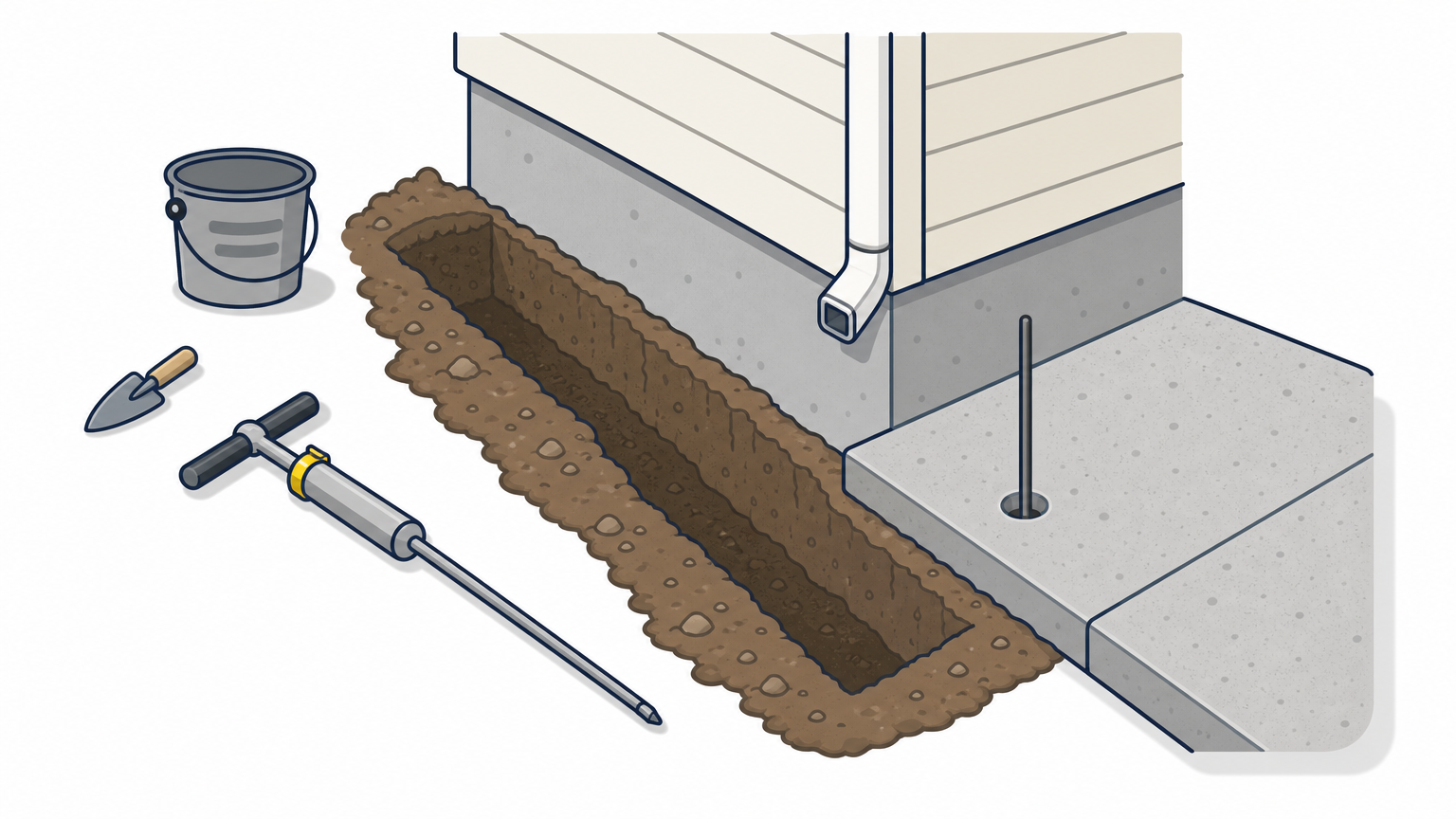
A technician digs a narrow trench along the foundation, drills through adjoining concrete where needed, and soaks the soil with diluted liquid termiticide to form a continuous barrier. The goal is an unbroken zone around the structure with no gaps for termites to slip through.
The step-by-step process
A typical application follows this order:
- Inspect the property. The technician locates activity, moisture sources, slab edges, and likely entry points.
- Measure the foundation. The product label sets how much mixed liquid goes into the ground, based on linear feet of foundation and treatment depth.
- Trench and rod the soil. Along bare dirt, the technician digs a trench beside the foundation and treats the soil in it. Rodding pushes liquid deeper.
- Drill and inject slabs. Where a patio, walkway, or garage slab touches the foundation, small holes let the technician inject liquid beneath the concrete. The holes are then patched.
- Treat the backfill. Soil that comes out of the trench is treated as it goes back in.
- Document and follow up. You should receive a written record of the product, the areas treated, and a re-inspection plan.
You never need to dig out or replace "infested" soil. The colony sits deeper than any shovel reaches, and the barrier works because foraging termites pick up the product and carry it back.
The best termite treatment for soil
The standard choice is a non-repellent liquid termiticide . Termites cannot detect it, so they walk through it, carry it to nestmates, and the colony declines over the following weeks. Repellent products can push termites to look for a gap instead.
Mesa soil adds a wrinkle. Hard caliche layers and landscape rock slow trenching, so technicians rod or drill more, and that is one reason bids differ. Our own termite control combines non-repellent insecticides with baiting stations, which gives you a barrier plus ongoing monitoring.
A good soil barrier is non-repellent, continuous, and documented in writing.
What soil termite treatment costs near Mesa
A basic exterior soil treatment averages $330 to $820, according to published cost data. Large infestations that need fumigation can reach $3,000 or more, and a termite inspection typically costs $75 to $150.
| Service | Typical published range |
|---|---|
| Termite inspection | $75 to $150 |
| Basic exterior soil treatment | $330 to $820 |
| Large infestation needing fumigation | $3,000 or more |
What moves the price
Several factors push a quote up or down. Linear feet of foundation matters most, because the label sets product volume by perimeter and depth. Slab edges that need drilling add labor, and hard soil or heavy rock cover slows the work.
The extent of activity matters too. A barrier alone costs less than a barrier plus wood treatment or bait stations. We base our rates on property size and offer free, no-obligation estimates, so you can see the number before committing.
A worked example
Cost per year is a fairer comparison than the sticker price. If a barrier lasts 5 to 7 years:
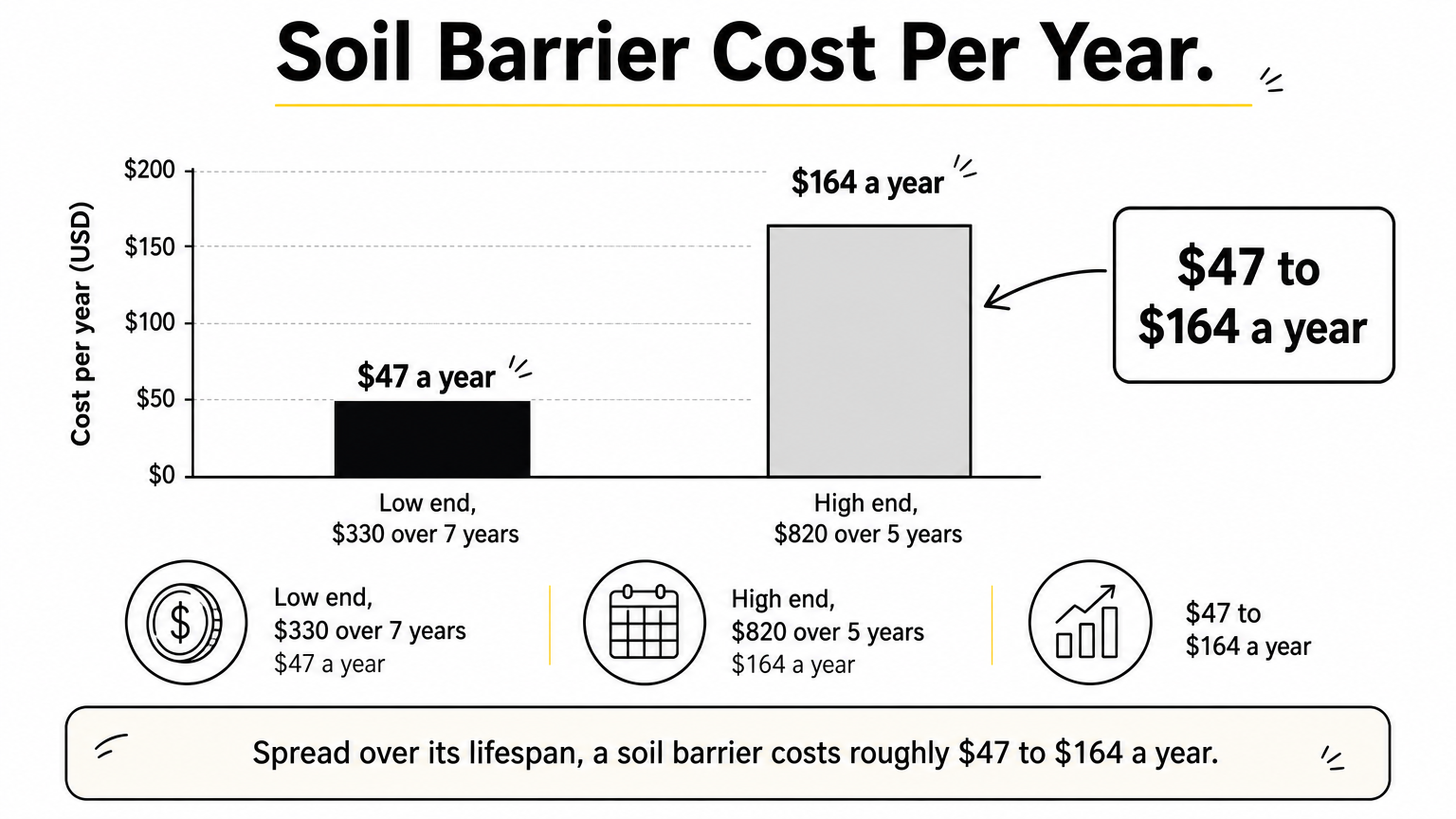
- The low end, $330 over 7 years, is about $47 a year .
- The high end, $820 over 5 years, is about $164 a year .
Homeowners and renters insurance typically does not cover termite treatment, so plan for it as maintenance. Get at least three itemized estimates and be wary of a quote far below the others.
Spread over its lifespan, a soil barrier costs roughly $47 to $164 a year.
How long soil treatment lasts
A professionally applied liquid soil treatment lasts about 5 to 7 years, while termite bait stations are typically rated for about 1 year. The real number depends on whether the barrier stays intact and on how well the home is sealed against moisture.
What shortens a barrier
Disturbed soil breaks the barrier. Digging for a pool, new irrigation lines, a patio extension, or a landscaping overhaul can open a gap in the treated zone. New additions and re-graded soil near the foundation have the same effect.
Moisture also works against you. A leaking pipe or sprinklers aimed at the wall keep soil damp and draw termites toward your home. Termites tend to return after treatment only if their original entry points were not sealed or protected.
How to keep it working
A few habits protect your investment:
- Schedule an inspection every year, so a technician can check the barrier.
- Fix plumbing leaks and aim sprinklers away from the foundation.
- Keep mulch, soil, and stored wood from touching stucco, siding, or wood trim.
- Call your technician before any digging near the house.
Our inspections cover foundations, crawl spaces, structural wood, and common termite entry points, so annual checks catch trouble while it is still small.
A soil barrier lasts as long as you leave the treated ground undisturbed.
How to choose a Mesa company for soil treatment
Choose a licensed, insured company that inspects first, explains its product and method in writing, and itemizes the bid. In Arizona, termiticide applicators are licensed through the Arizona Office of Pest Management, so ask to see the license.
Questions to ask before you hire
Bring these questions to every estimate:
- Which product will you use, and is it non-repellent?
- How many linear feet will you treat, and where will you drill the slab?
- How will you handle hard caliche or rock landscaping?
- What is documented after the job, and when is the re-inspection?
- How long should my family and pets stay off treated areas?
- What does the quote leave out, such as repairs or follow-up visits?
Compare answers, not just prices. A company that is vague about product or footage is hard to hold to a standard later.
Soil barrier, bait, or both
A liquid barrier gives you fast, perimeter-wide protection. Bait stations add ongoing monitoring and help when digging or concrete makes trenching hard. Many homes do best with both.
That is how we approach termite control, and a free estimate shows you what your property needs. Whichever company you pick, make sure the plan fits your foundation, not a template.
Pick the company that inspects first and puts the plan in writing.
Getting your soil barrier in place
A soil termite treatment works because it sits where termites travel, and a continuous, non-repellent barrier protects a Mesa slab home for roughly 5 to 7 years. Expect a basic treatment to cost $330 to $820, keep the treated soil undisturbed, and book an annual inspection so small problems stay small.
If you suspect termites or want a barrier before they show up, start with an inspection and a written quote. You can learn how our termite treatment services work, or call Polite Pest Co. at (480) 331-5040 for a free, no-obligation estimate.