

Termite Liquid Treatment: How It Works and What to Expect
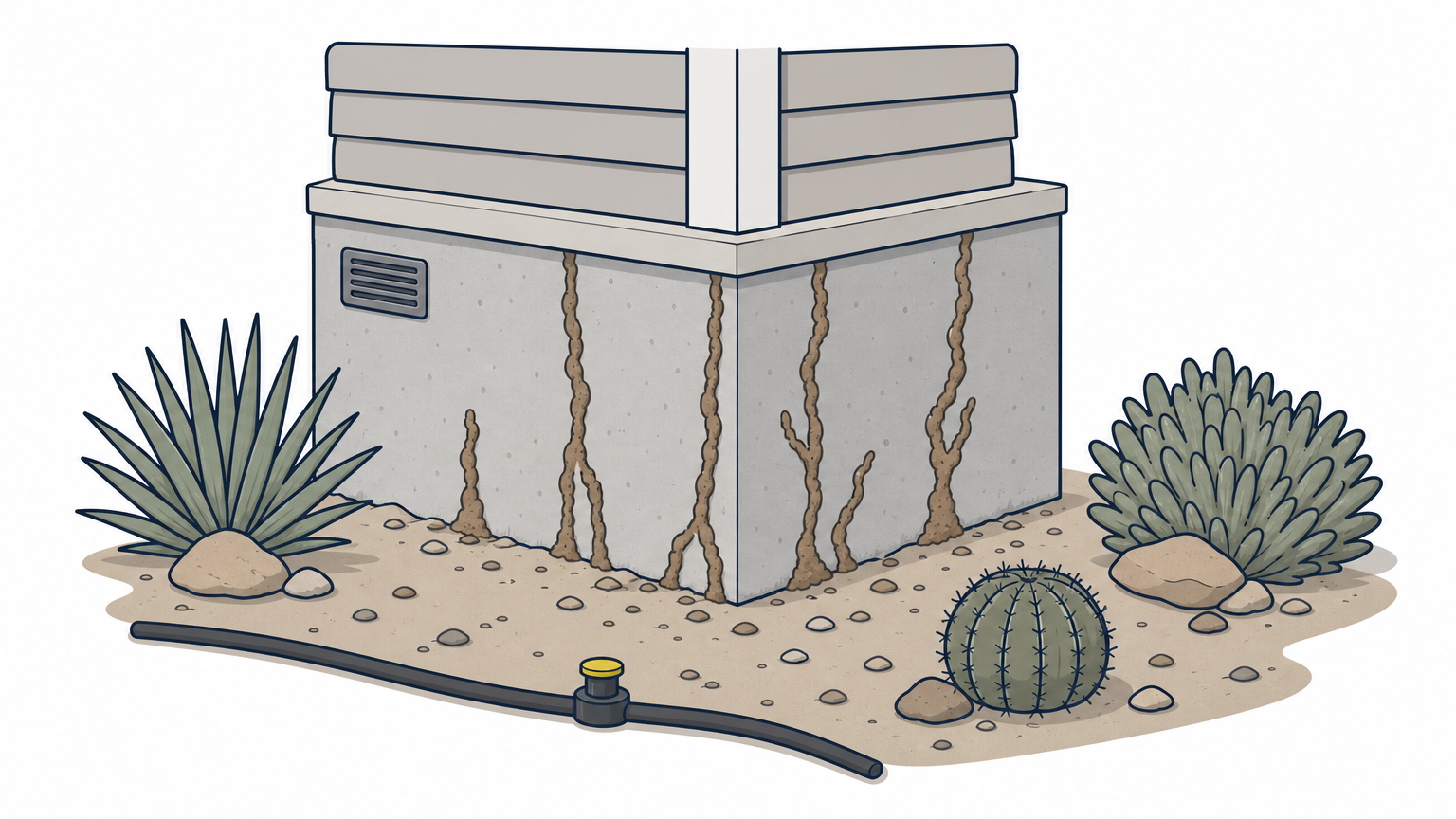
If you found mud tubes along your foundation or discarded wings on the windowsill, you're probably trying to figure out how to actually get rid of termites, not just read about them. Termite liquid treatment is one of the two main options you'll hear about from any pest control company in Mesa, and it's often the fastest way to stop an active infestation before it spreads into your framing.
A liquid barrier termite treatment works by creating a continuous chemical zone around and under your home, so termites either die on contact or carry the termiticide back to the colony. Unlike bait stations, which take weeks or months to work, a properly applied liquid termite treatment can start killing termites within days, which matters a lot when you've got active damage happening right now.
In this article, we'll break down exactly how termite treatment liquid applications work, what termiticides get used and why, how liquid treatments stack up against bait systems, and what you should realistically expect during and after service. If you're in Mesa, Gilbert, Chandler, or anywhere else in the Phoenix area where termites are a year-round concern, this will give you a clear picture before you call anyone out to your property.
Why liquid termite treatment matters for your home
Arizona's dry heat doesn't stop termites the way most homeowners assume it should. Subterranean termites need moisture to survive, and they find it underground, near irrigation lines, and against foundations where condensation collects. Mesa, Gilbert, and Chandler all sit on soil that these colonies favor, and a single mature colony can house hundreds of thousands of workers chewing through wood, drywall paper, and even some plastics 24 hours a day. Once they find a way into your home's framing, the clock starts running, and it doesn't stop until someone eliminates the colony or the wood runs out.
The financial risk of waiting
Homeowners insurance almost never covers termite damage, because insurers classify it as a preventable maintenance issue rather than a sudden loss. That means every month you delay treatment, you're absorbing repair costs directly out of pocket. The National Pest Management Association estimates termites cause over $5 billion in property damage annually across the US, and Arizona's warm climate keeps colonies active nearly year-round instead of dying back in winter like they do in colder states, which is a big part of why termites are a real concern for Phoenix homeowners.
A termite colony doesn't take breaks in Arizona, so neither should your defense against one.
Structural damage happens quietly
Termites don't announce themselves the way roaches or ants do. They tunnel through wall studs, floor joists, and support beams from the inside, which means visible damage often shows up only after the wood has lost most of its structural integrity. By the time you spot sagging drywall, hollow-sounding baseboards, or doors that suddenly stick, a liquid barrier termite treatment is addressing damage that's already been done, not just preventing future problems.
Why liquid treatment fits Mesa properties specifically
Most homes in the Phoenix metro area sit on slab foundations, which creates a specific vulnerability: termites travel through tiny cracks and expansion joints you'll never see without a trained inspection. A liquid termite treatment applied around the full perimeter and under slab penetration points closes off those entry paths completely, rather than relying on termites finding and feeding at scattered bait points. For a property with an active infestation or a documented history of termite pressure, that speed and thoroughness is exactly why pest control companies default to liquid treatment as the first line of defense. Polite Pest Co.'s Mesa termite control and prevention program is built around this same logic: treat the perimeter first, then monitor.
How liquid termite treatment works
A licensed technician starts by trenching along your foundation, typically 6 inches wide and 6 inches deep, then injects termiticide directly into the soil so it forms an unbroken chemical barrier between the ground and your home's structure. For slab homes, that means drilling through concrete at expansion joints, plumbing penetrations, and porch attachments, since those are the gaps termites actually use to get inside. The goal isn't to spray the surface, it's to saturate the soil zone termites travel through, which is why DIY perimeter sprays rarely solve an active problem.
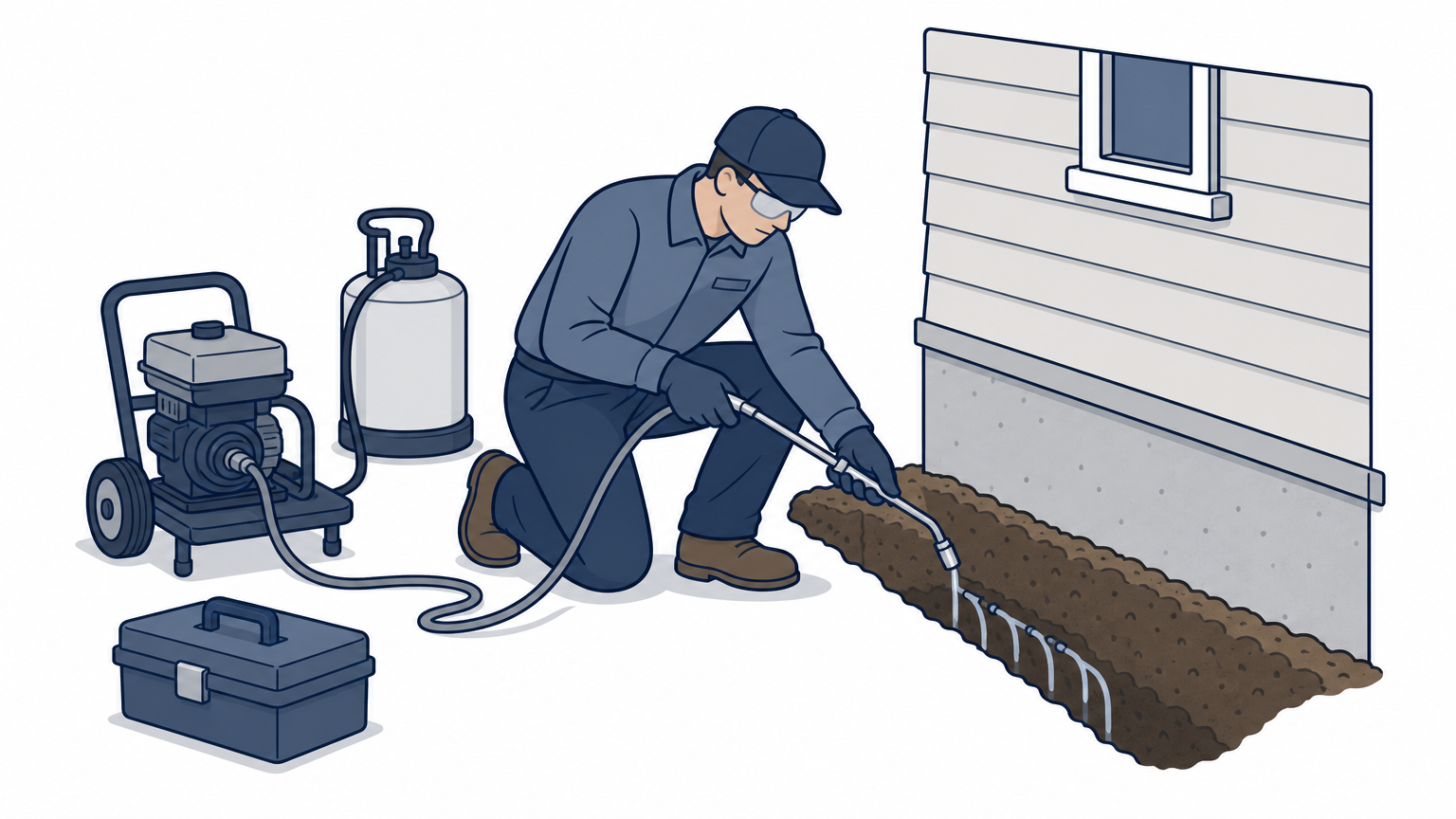
Liquid treatment works because it targets where termites travel, not just where you see them.
What's actually in the termiticide
Most companies now use non-repellent formulas like fipronil or imidacloprid instead of the older repellent pyrethroids. Non-repellents matter because termites can't detect them and avoid them, so they tunnel straight through the treated soil, pick up the chemical, and carry it back to the colony through grooming and feeding contact. That secondary transfer is what actually collapses a colony, rather than just keeping termites out of one section of wall.
The typical application sequence
- Inspection to map mud tubes, moisture sources, and slab penetration points.
- Trenching and rodding around the full foundation perimeter.
- Drilling through concrete slabs, patios, or porches where needed.
- Injecting termiticide at label-specified depth and concentration.
- Sealing drill holes and backfilling trenches.
- Follow-up inspection, usually within 30 to 90 days, to confirm activity has stopped.
Each step matters because a gap in the barrier, even a small one, gives the colony a path back inside.
Liquid treatment vs. bait systems: which is better
Bait systems work by placing stations every 10 to 20 feet around your property, loaded with a slow-acting toxicant that foraging termites carry back to the colony. Given enough time, usually 6 to 12 months, they can eliminate a colony without trenching or drilling. But that timeline is the catch: bait only works once termites happen to find and feed at a station, and there's no guarantee they will before they've already reached your framing.
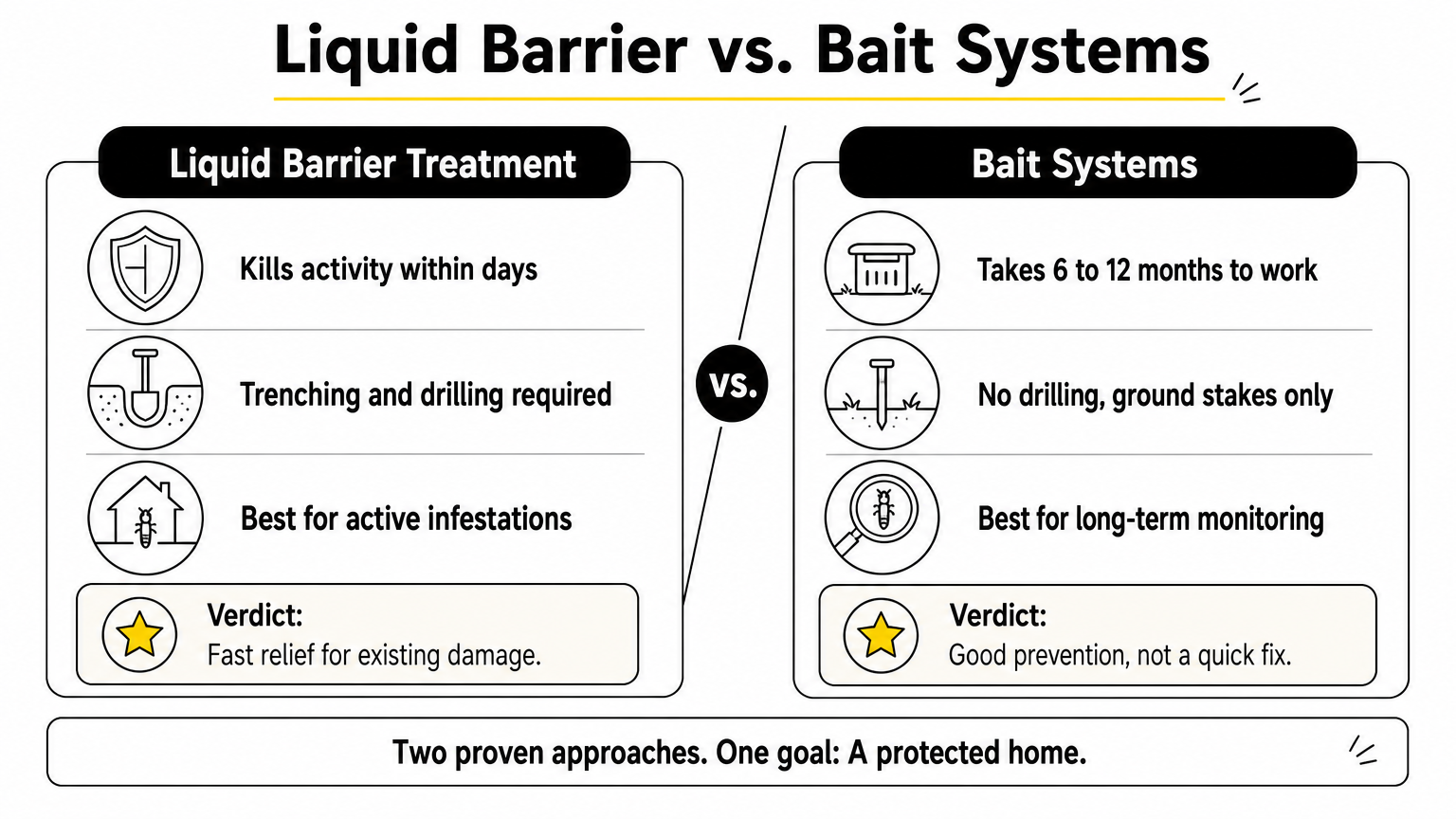
If termites are already inside your walls, you need a barrier that stops them today, not bait that might work in six months.
Here's how the two approaches actually compare for a Mesa homeowner dealing with real termite pressure:
| Factor | Liquid barrier treatment | Bait systems |
|---|---|---|
| Time to kill activity | Days | Weeks to months |
| Best for | Active infestations | Long-term monitoring |
| Installation | Trenching, drilling | Ground stakes, no drilling |
| Disruption | Moderate, one-time | Minimal |
| Ongoing maintenance | Periodic reinspection | Quarterly station checks |
| Colony elimination confirmed by | Inspection after treatment | Bait consumption at stations |
Growth of an existing colony makes the choice fairly clear. If you've already seen mud tubes, discarded wings, or damaged wood, a liquid termite treatment stops the bleeding immediately while a colony can keep expanding through a slower bait cycle. Homes without current activity, especially ones near green belts or irrigation canals common in Queen Creek and in our Gilbert termite control service area, often do fine on bait as a preventive measure. Realistically, many pest control companies, Polite Pest Co. included, recommend liquid as the initial treatment for confirmed infestations and reserve bait station termite treatment in Mesa for ongoing monitoring once the immediate threat is gone.
Cost, DIY options, and what to expect from treatment
Most Mesa homeowners pay between $1,200 and $3,500 for a full liquid termite treatment , depending on the home's square footage, foundation type, and how many slab penetrations need drilling, and a full termite treatment price breakdown shows where those numbers come from. A single-story home on a straightforward slab sits at the lower end, while a two-story property with a crawlspace, multiple additions, or extensive concrete work runs higher because of the extra drilling and termiticide volume required. Most companies, including Polite Pest Co., offer a free inspection first so you're pricing an actual treatment plan instead of a rough estimate.
Why DIY liquid treatments usually fail
Hardware store termiticide concentrates exist and treating termites yourself sounds cheaper, but it almost never solves an active infestation. Retail products come in lower concentrations than what licensed applicators use, and without proper trenching equipment, most homeowners end up with gaps in the barrier that termites simply route around. Arizona also regulates termiticide application under state pesticide law, and applying certain products without a license can put you in violation regardless of intent.
A partial barrier isn't a barrier at all, it's just a detour for termites.
What happens after professional treatment
Expect a follow-up inspection within 30 to 90 days to confirm the colony has stopped feeding near your home. Here's what a typical post-treatment timeline looks like:
- Days 1-14: Termiticide spreads through the soil zone and active foragers begin dying.
- Weeks 2-6: Colony activity near the structure drops off noticeably.
- Months 1-3: Follow-up inspection confirms elimination or flags any missed access points.
- Ongoing: Annual reinspection keeps the barrier's coverage documented.
Most termiticides remain effective in soil for 5 to 10 years, though warranty terms vary by company.
Keeping termites out for good
A liquid termite treatment solves the immediate problem: it kills the colony feeding on your home right now, not the one that might show up next year. That's the core difference between liquid barriers and bait systems, and why most Mesa homeowners with active damage choose liquid first, then layer in monitoring once the threat is gone. Soil-applied termiticide sitting untouched for 5 to 10 years does more work protecting your framing than any DIY spray you'll find at a hardware store.
Getting this right depends on trenching, drilling, and coverage that a licensed technician handles correctly the first time. Skip a slab penetration or leave a gap in the barrier, and termites will find it. If you've spotted mud tubes, discarded wings, or damaged wood anywhere on your property, don't wait for it to get worse. Schedule a no-cost termite inspection in Mesa with Polite Pest Co. and get a real treatment plan instead of a guess.