

Pest Control Rodents near Me: 4 Provider Types in Mesa
The right answer to pest control rodents near me is a licensed local company that seals the gaps rodents use, traps the animals already inside, and returns to check its work. Bait alone rarely finishes the job. In Mesa you have four realistic choices: a local rodent specialist such as Polite Pest Co., a national pest control chain, a wildlife removal company, or your own traps paired with professional sealing. The local specialist fits most homeowners and small businesses. A chain fits property managers who want one contract. Wildlife removal fits attic noises you cannot identify, and DIY fits a single mouse.
You probably searched because you heard scratching in the ceiling, found droppings in the pantry, or saw a chewed wire. The results are mostly call centers and branch pages that all promise the same thing, so it is hard to tell who will actually fix the problem.
This article sorts the four provider types by how they work, who they suit, and what to check before you pay. Then it shows how to compare quotes and reviews so you can hire with confidence.
1. Polite Pest Co., a local rodent specialist
How it works
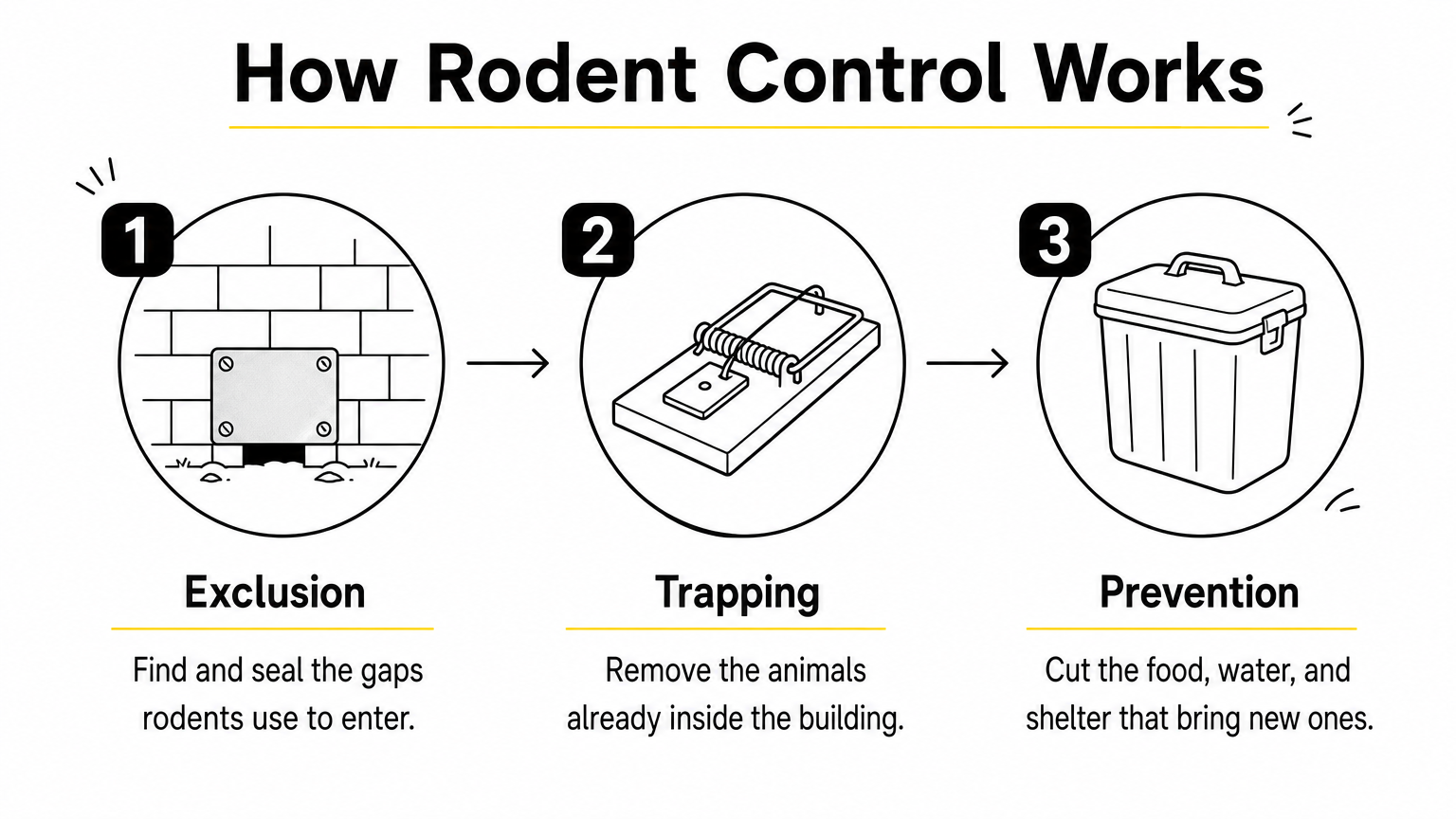
Polite Pest Co.'s rodent control covers pack rats, house mice, deer mice, and roof rats through three steps: exclusion, trapping, and prevention. Exclusion means finding and sealing the gaps rodents use to get in. Trapping removes the animals already inside. Prevention cuts the food, water, and shelter that bring new ones.
The order matters in the Phoenix area. Roof rats travel along wires and branches from palms and citrus trees into attics, while pack rats nest in yard debris and under vehicle hoods. Sealing without trapping shuts rodents inside , and trapping without sealing invites the next group .
Rodents leave for good only when you seal the entry points and remove the animals already inside.
Who it suits
Polite Pest Co. is a small, family-owned company run by Erick Estrada, with over a decade of pest control experience . It serves Mesa, Chandler, Gilbert, Queen Creek, Phoenix, and Scottsdale. It is a good fit for:
- Homeowners with roof rats or pack rats near citrus trees, palms, or block walls
- Business owners who want discreet commercial pest management that does not alarm customers
- People who want an owner-operated local team instead of a call center
Cost and what to check
Polite Pest Co. offers free, no-obligation estimates . Its monthly and bimonthly recurring plans are priced by property size, and those rates apply only to the recurring plans. You can call (480) 331-5040 Monday to Friday, 8:00 AM to 4:00 PM. The office is closed on Sundays. Ask these questions:
- Which species do I have, and how did you tell?
- Where are the entry points, and how will you seal them?
- How many follow-up visits are included?
- What prevention steps come after the animals are gone?
2. National pest control chains
How it works
Chain branches usually sell rodent work as one service inside a broader pest program. A technician inspects, sets traps or bait stations, and schedules return visits under company protocols. You get online scheduling and a recognizable brand , but rodent skill varies from branch to branch and from technician to technician.
The practical risk is scope. Some chains treat rodents as an add-on to quarterly pest service and focus on bait, while others include sealing. You need to see which one your quote describes.
A chain's brand tells you little about rodents. The written scope tells you everything.
Who it suits
A chain suits you if you want ants, scorpions, and rodents handled under one recurring contract . It also suits property managers who need the same service and paperwork across several buildings. If you only have a rodent problem, a contract for general pest service may be more than you need.
Cost and what to check
Chains typically quote after an inspection, and many bundle rodent work into a plan, so the monthly price can hide what the rodent portion costs. Check these points:
- Is exclusion (sealing) included, or sold as a separate job?
- Does the quote require a recurring contract, and what are the cancellation terms?
- Is any guarantee in writing, and how long does it last?
- Is the technician a licensed Arizona applicator?
3. Wildlife removal companies
How it works
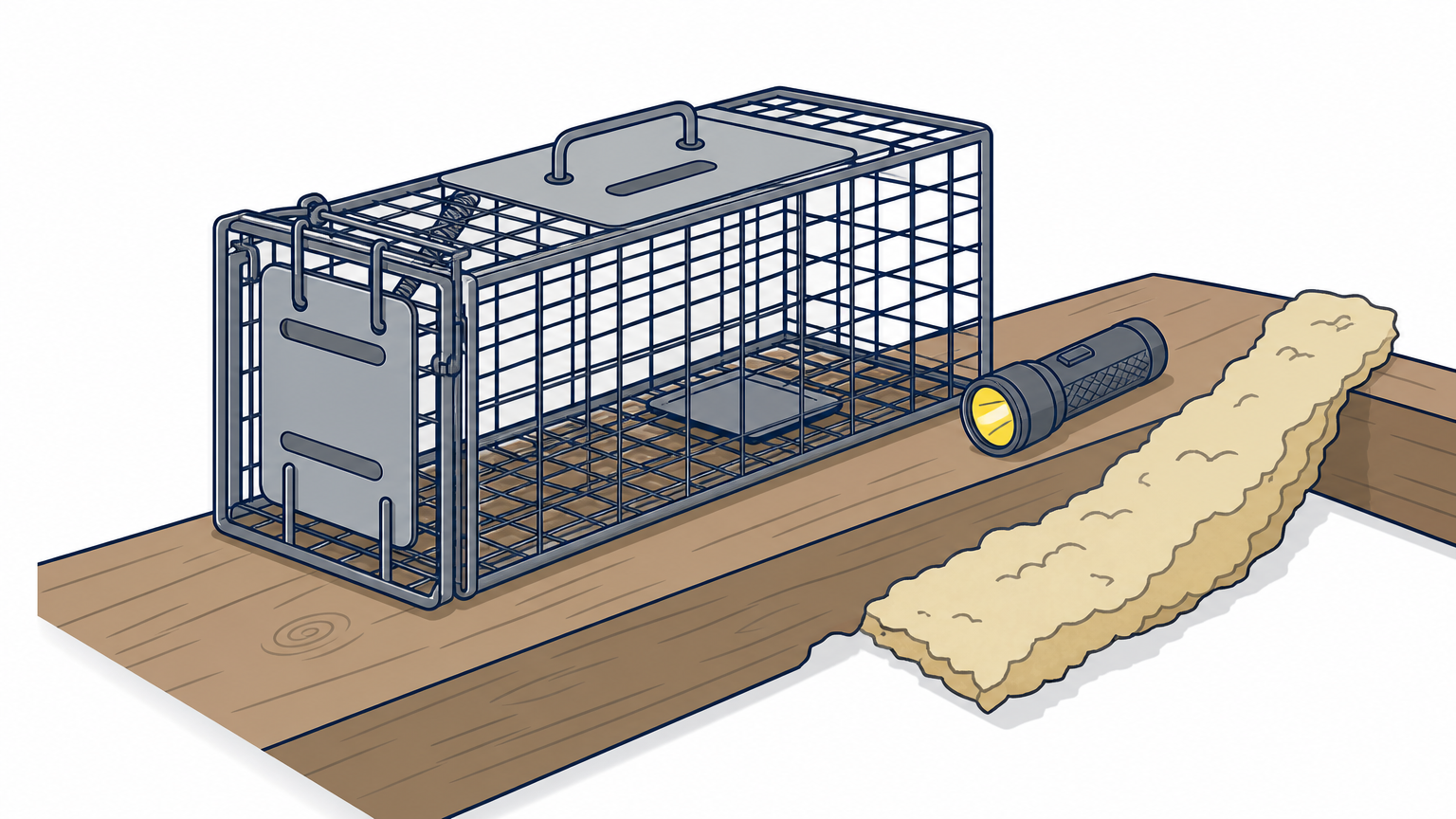
Wildlife companies trap and remove animals, and many also handle attic cleanup, droppings removal, and insulation repair . They are built for raccoons, squirrels, bats, and birds, and many also take on rats. Their traps are often larger and set on roofs and in attics, where the damage is.
Their methods lean on trapping and physical repair instead of recurring treatments. That works well for a defined, heavy problem. It works less well for a mouse in a kitchen cabinet.
Choose wildlife removal when the animal is unidentified or the attic damage is the bigger problem.
Who it suits
This option is best when noises overhead could be a rat, a squirrel, or something larger . It also fits a heavy infestation where droppings have soiled insulation and you need cleanup, not just removal. It is a poor match for commercial kitchens, garages, and small mouse problems that need ongoing monitoring.
Cost and what to check
Wildlife jobs are usually priced by the project, because repairs and cleanup vary so much. Ask for a written scope that lists what is covered:
- Which animals does the company handle, and how does it identify them?
- Does the price include sealing, cleanup, and insulation work?
- How long are the traps left in place, and who checks them?
- Does the company have a license and insurance?
4. DIY traps plus professional sealing
How it works
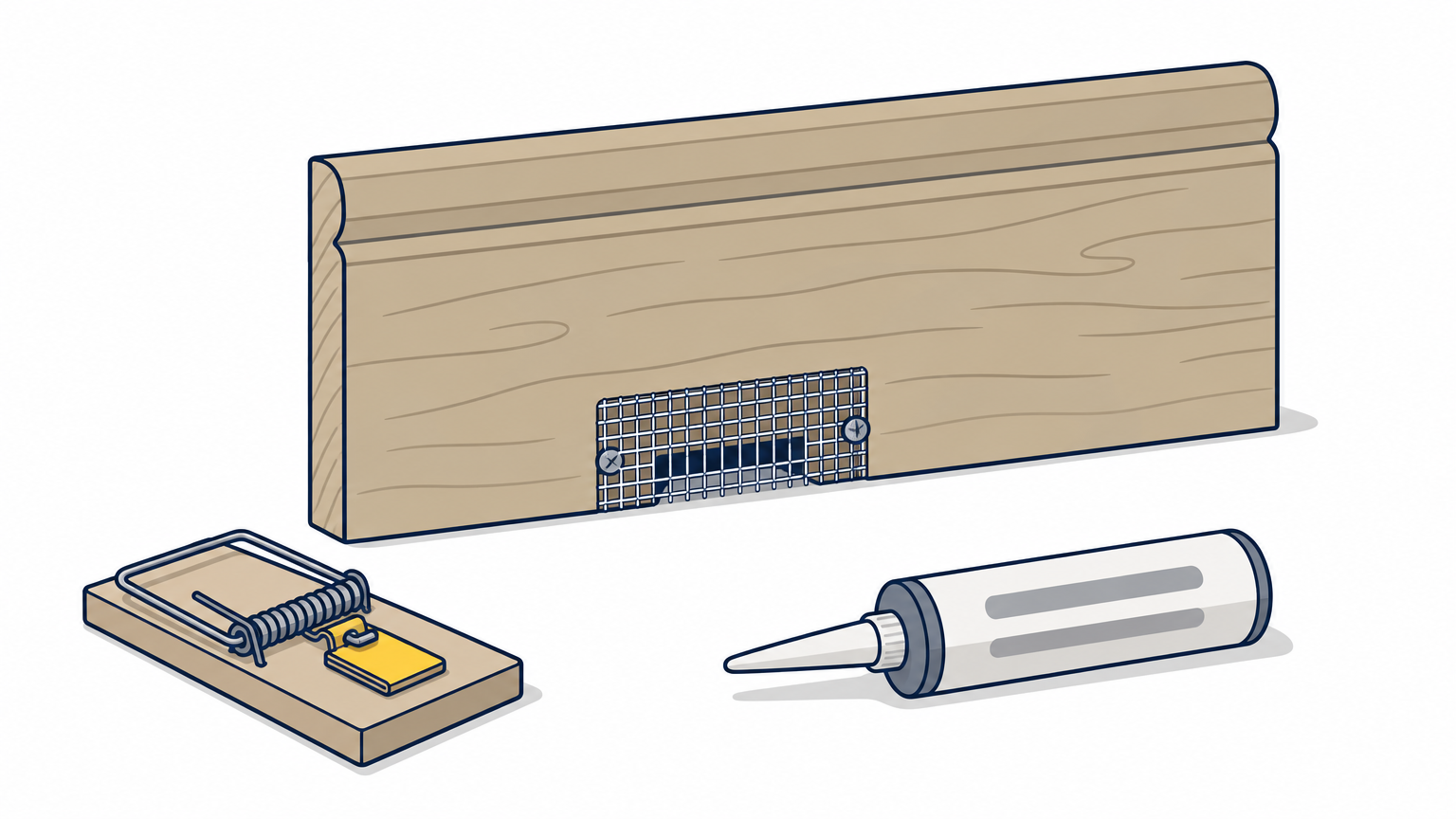
For one or two mice, you can set snap traps along walls where droppings show up and bait them with peanut butter. Check them daily. Skip poison, because a poisoned rodent often dies inside a wall and a pet or wild animal can eat it.
Sealing is the part most people get wrong. A mouse fits through a gap about a quarter inch wide, and a rat through about half an inch. Use hardware cloth or copper mesh with sealant , not foam alone, which rodents chew through.
Traps solve today's mice. Sealed gaps solve next month's.
Who it suits
DIY suits a single mouse, a small budget, and someone comfortable on a ladder. It does not suit roof rats in an attic, because you cannot reach every entry point, or any case where traps keep catching animals for more than two weeks. Wear gloves and a mask , wet droppings with disinfectant before wiping, and never sweep them dry. Deer mice can carry hantavirus.
Cost and what to check
Traps and sealing materials cost a fraction of a service call, but your time and the risk of missing an entry point are the real cost. Call a professional when:
- Traps keep catching animals after two weeks
- You hear movement in the ceiling or walls
- Droppings appear in more than one room
- You see rats instead of mice
How to compare rodent quotes and reviews
Compare quotes line by line
Get at least two written quotes and compare what each one includes, not only the total. The question "how much does it cost to get rid of rats" has no single answer, because price follows the number of entry points, the species, the size of the property, the repairs, and the number of visits. A cheaper quote that covers trapping only will often cost you more once the rodents return.
| Line item | What a good quote shows | Red flag |
|---|---|---|
| Inspection | Entry points found and listed | "We'll see when we get there" |
| Exclusion | Materials and locations named | Bait stations only |
| Trapping | Method and number of visits | Poison as the only method |
| Follow-up | Dated return visits | No check after the first visit |
| Cleanup | Droppings and damage addressed | Not mentioned |
| License | Arizona license number given | Vague or missing |
Compare scope first and price second, because a rodent job that is not sealed gets done twice.
Read reviews for rodent jobs
Filter reviews for the words "rat," "mouse," "attic," or "roof rat." A five-star review for an ant treatment says little about rodent skill. Look for reviews that mention how the company found the entry points and whether the problem stayed gone weeks later. Also check how the company handled callbacks, because rodent jobs often need a second visit.
Choosing who to call
Pest control does get rid of rodents when the provider seals entry points, removes the animals, and checks back. For most Mesa homes and businesses, that points to a local specialist. A chain fits multi-building contracts, a wildlife company fits unknown attic animals, and DIY fits one mouse. Whoever you choose, put the scope in writing and compare it line by line.
If you want a local quote, request a free, no-obligation estimate from Polite Pest Co.'s rodent specialists and ask them to walk you through the entry points they find.