

Rat Pest Control near Me: How to Find the Best Pro
You heard scratching in the attic at 2 a.m., or you found droppings behind the pantry, both telltale signs of a rodent problem, and now you're typing "rat pest control near me" into Google at midnight, hoping for a fast answer. Rats don't wait for business hours, and finding the best rat pest control nearby starts long before the truck pulls up. They chew through wiring, contaminate food, and multiply fast, so the search you're running right now matters more than it feels like it should.
Finding the right company isn't just about who shows up first in the search results. You need to know how to compare local exterminators , including which nearby companies actually handle rats, spot red flags in reviews, and understand what a fair price actually looks like for rodent removal in the Phoenix area, where rats squeeze into homes through gaps as small as a quarter.
This guide walks you through exactly how to vet a pro, from checking licensing and treatment methods to asking the right questions before you sign anything. We'll cover what separates a one-time trap job from real long-term exclusion work, and how a local company like Polite Pest Co., with over a decade serving Mesa, Chandler, Gilbert, and the greater Phoenix metro, approaches rat problems differently than a national chain that's never seen your neighborhood's specific pest pressure.
1. Make sure rat control is a true specialty, not an add-on
Many general pest companies treat rats as an afterthought, something they'll handle if you ask, but their real business is spraying for ants and spiders. Rat removal takes a different skill set entirely. It requires reading behavior patterns, identifying entry points across a whole structure, and building an exclusion plan rather than just dropping a few traps and calling it done. Before you hire anyone, find out whether rat and mice control in Mesa AZ is a core service line or a box they check to avoid turning down work.
Why it matters
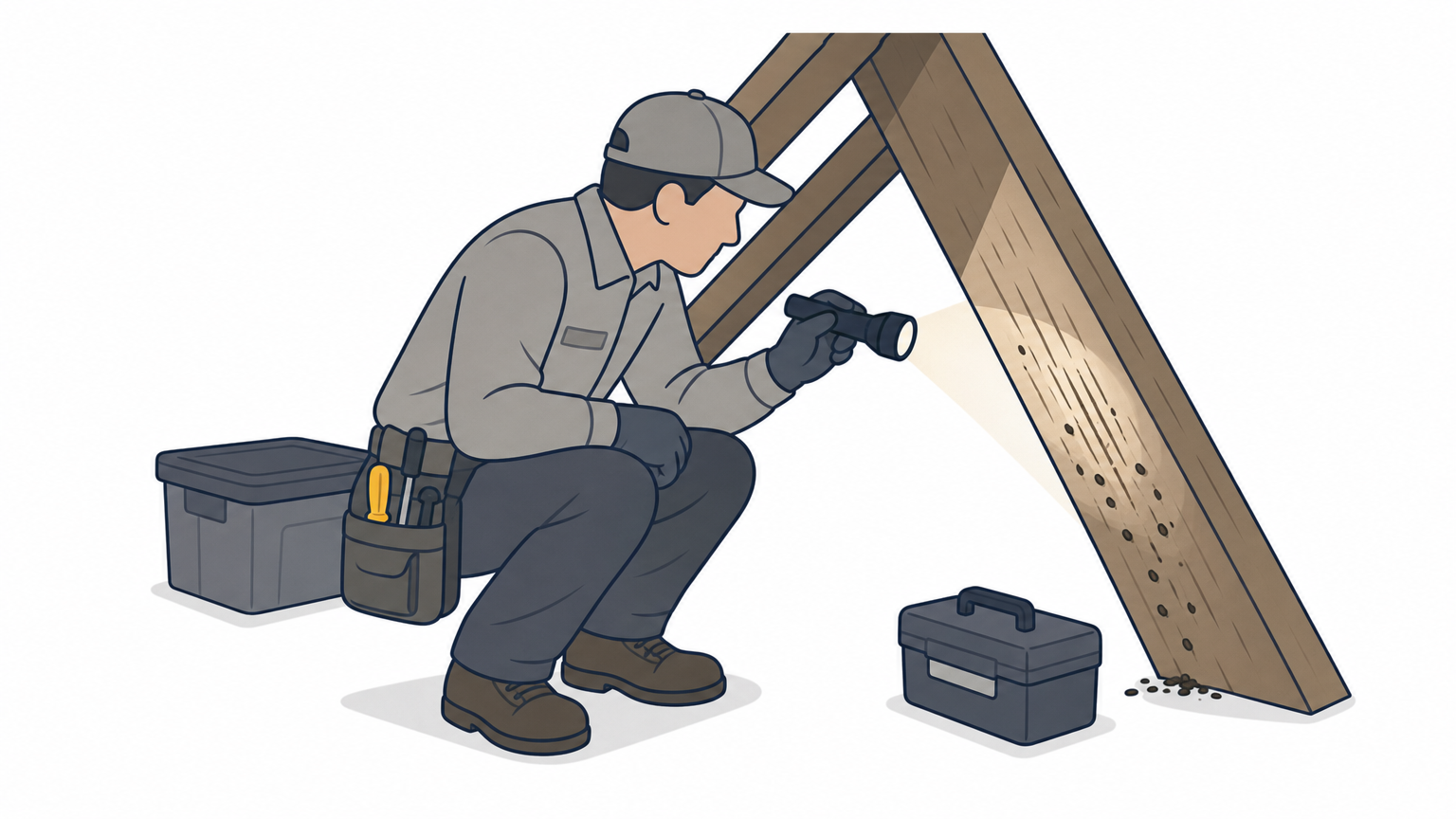
Rats are smart, and they adapt fast to poorly placed traps or bait stations. A technician who mostly deals with insects might not recognize a rub mark along a wall stud, or know that rats will run the same path along a fence line every single night. Specialized rat technicians understand rodent psychology: where they nest, how far they travel from a food source, and which parts of a Phoenix-area home (garage corners, roof voids, block wall gaps) tend to attract them most. Without that depth, you end up paying for a service that knocks down the population for a few weeks before it rebounds.
A company that treats rats as a side service will give you a side-service result.
This is also where local expertise separates a real specialist from a generalist. Rats in Mesa and Chandler behave differently than rats in a humid Midwest basement. They're drawn to irrigation lines, citrus trees, and block wall voids that are common in Arizona landscaping. A tech who's worked hundreds of these local jobs will already know to check your weep screed and roof tile gaps before you even mention hearing noises up there.
Questions to ask a pro
Ask these directly during your first call or free estimate, and pay attention to how quickly and specifically the technician answers:
- Do you have technicians who specialize in rodents, or does everyone handle every pest type?
- How many rat jobs has your team completed in the last year?
- What's your process for a rat job versus a general pest visit?
- Can you describe a recent rat case in my neighborhood or ZIP code?
- Will the same technician handle inspection, trapping, and exclusion, or does that get split between different people?
Vague or rushed answers are a signal to keep looking. A company confident in its rat pest control experience will walk you through its process without hesitation.
2. Verify licensing, insurance, and technician training
Anyone can buy a sprayer and call themselves an exterminator, but Arizona requires state licensing through the Arizona Office of Pest Management for anyone applying pesticides or handling structural rodent work. Before you let a technician into your attic or crawlspace, confirm the company carries an active license number and can produce it without digging through paperwork. This single check filters out a surprising number of fly-by-night operators who show up in a quick search for rat exterminator near me but disappear the moment something goes wrong, which is why finding the right rat exterminator starts with credentials.
Why it matters
Licensing tells you the company passed a state exam covering safe pesticide use, application rates, and rodent biology. Insurance coverage matters just as much, because rat work often involves crawling through attics, cutting hardware cloth, and sealing rooflines, all places where accidents happen. If an uninsured technician damages your ductwork or gets hurt on your property, you could be liable.
No license, no insurance, no job in your house.
Ongoing technician training rounds this out. Rodent behavior and building materials both change, so a company that invests in continuing education keeps its crews sharper than one that trained its staff once and stopped.
Questions to ask a pro
- Can you show me your Arizona Office of Pest Management license number?
- Are your technicians covered by liability and workers' comp insurance?
- What ongoing training do techs receive for rodent-specific work?
- Has your license ever been suspended or subject to a complaint?
3. Look for proven experience with local rat problems
Experience only counts if it's the right kind. A company might have twenty years in business but only a handful of actual rat jobs, mostly scattered between scorpion and ant contracts. Ask directly how many rodent jobs the crew handles in a typical month, and whether they've worked in your specific neighborhood. Desert cities like Mesa, Gilbert rat and mouse removal territory, and Queen Creek each have their own rat pressure points, from citrus groves to canal banks, and a technician who's worked those streets before will spot problems faster than one guessing at it.
Why it matters
Local patterns matter more than general pest knowledge. Rats near irrigation canals behave differently than rats nesting in a suburban cul-de-sac with mature landscaping. A proven track record in your specific area means the company already knows which block walls, roof types, and yard features tend to invite rodents in Phoenix-area homes. That kind of regional pest knowledge saves you time and money, because the tech isn't learning your neighborhood on your dime.
Experience with rats in general isn't the same as experience with rats in your zip code.
Companies that have handled dozens of local cases can usually describe patterns specific to your area without hesitation, which is a good sign you're talking to a real specialist rather than someone reading from a script.
Questions to ask a pro
- How many rat jobs have you completed in my city or zip code this year?
- What are the most common entry points you find in homes like mine?
- Can you name a nearby street or subdivision where you've recently treated rats?
- Do seasonal patterns change how you approach rat control here?
4. Check reviews, ratings, and real customer feedback
Online reviews tell you what a sales pitch won't. Before you book anyone found through a search for pest control near me , spend ten minutes reading through Google reviews, not just the star average. Look for photos of actual rat entry points sealed, mentions of technician names, and comments about follow-up visits. A pattern of detailed, specific feedback usually beats a wall of generic five-star praise with no substance behind it.
Why it matters
Genuine customer reviews reveal whether a company actually solves rat problems or just shows up, sets a few traps, and disappears. Watch for repeated complaints about rats returning within weeks, technicians who never called back, or surprise charges after the estimate. A few negative reviews aren't a dealbreaker, since no company bats a thousand, but how the business responds tells you a lot about its customer service standards . Does the owner reply professionally, or ignore complaints entirely?
A company's response to bad reviews reveals more than the good reviews ever will.
Third-party sites like the Better Business Bureau add another layer of verification beyond what shows up on Google, especially for checking complaint history and resolution patterns.
Questions to ask a pro
- Can you point me to recent reviews from customers with rat problems specifically?
- How do you handle a customer complaint or a callback request?
- Do you have local references I can contact directly?
- What's your average rating across Google, Yelp, and the BBB?
- Have you had any licensing complaints filed against you?
5. Compare pricing, service plans, and free estimates
Rat removal pricing varies widely depending on property size, infestation severity, and whether you need one-time trapping or full exclusion work, so it helps to know the treatment options available for rats before you ask for numbers. Most reputable companies, including Polite Pest Co., offer a free, no-obligation estimate before any work begins, so you can compare costs without committing upfront. Watch for quotes that seem unusually low, since they often skip exclusion work entirely and leave the actual entry points untouched.

Why it matters
Understanding the difference between a one-time treatment and a recurring pest control plan helps you avoid surprise costs down the road. A single trapping visit might knock down the visible rats, but without sealing entry points, new ones move in within weeks. Recurring home pest treatment plans in Mesa, billed monthly or bimonthly, typically include follow-up checks and re-baiting, which costs more upfront but saves money over a full year of repeat calls.
The cheapest quote is rarely the cheapest outcome once rats come back.
Competitive rates should reflect your property's actual size and infestation level, not a flat rate pulled from a generic price list.
| Service type | Typical scope | Best for |
|---|---|---|
| One-time trapping | Traps set and removed, no exclusion | Minor, isolated sightings |
| Full exclusion job | Inspection, sealing entry points, trapping | Active infestations |
| Recurring plan | Monthly/bimonthly visits, monitoring | Ongoing prevention |
Questions to ask a pro
- Does the estimate include exclusion work or just trapping?
- What's included in a recurring plan versus a one-time visit?
- Are follow-up visits included in the quoted price?
- How do you calculate pricing for larger properties or pest management for a Mesa business?
6. Ask how they inspect, trap, and exclude rats
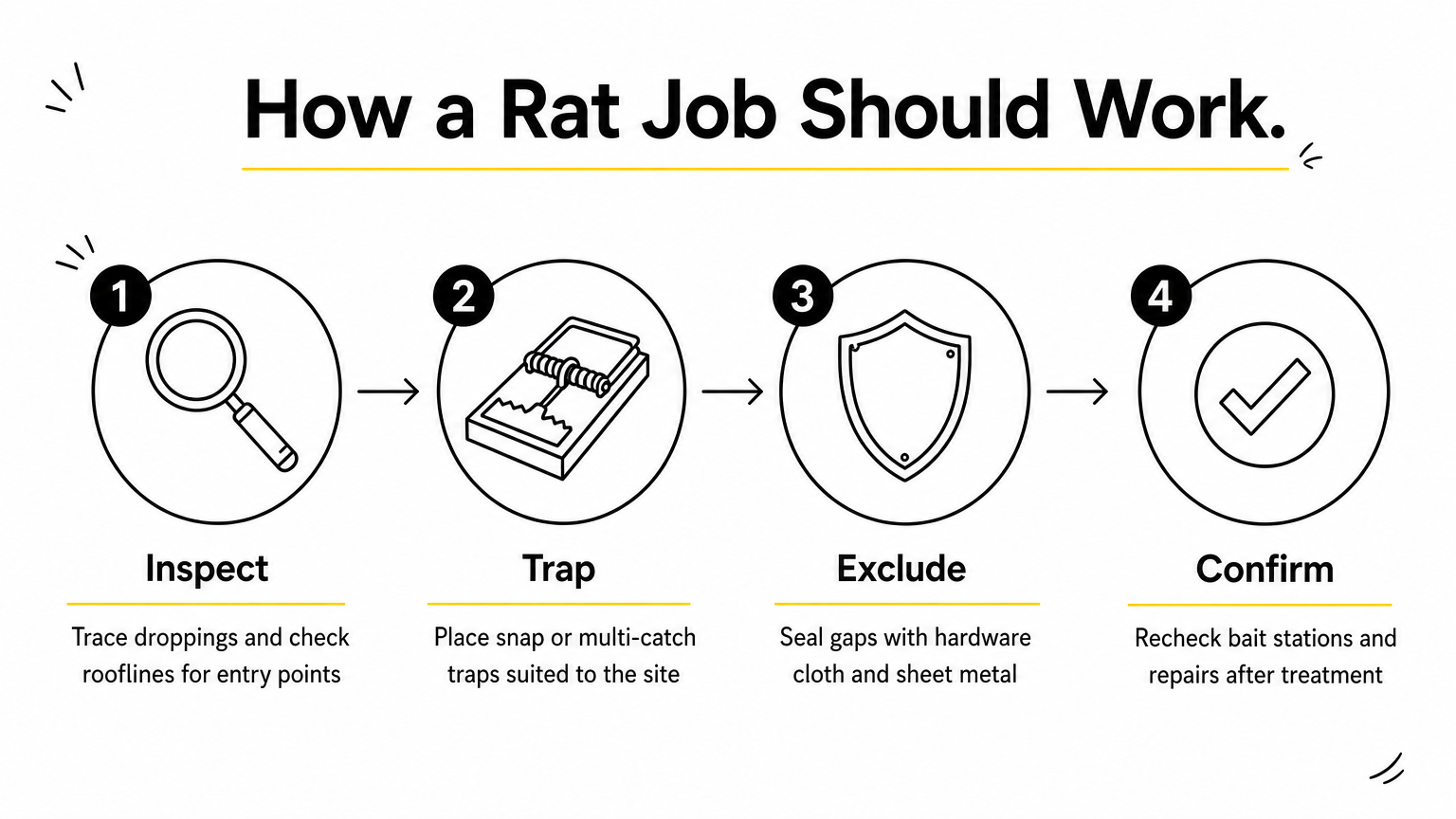
A thorough rat job follows a specific sequence, not a single visit with a few snap traps tossed in the garage. Ask the technician to walk you through their inspection process step by step, from checking the attic and roofline to tracing droppings along baseboards and fence lines. Good companies map every entry point before they set a single trap, because trapping without sealing gaps just clears out one generation of rats before the next moves in through the same hole.
Why it matters
Exclusion work is what actually stops the cycle. Without it, you're paying for rodent removal that only treats symptoms. A real inspection covers the roof tiles, weep screed, vent covers, and any gap around plumbing or utility lines, all common entry points on Phoenix-area homes. The trapping method matters too: snap traps, multi-catch traps, and bait stations each fit different situations, and a technician should explain why they're choosing one over another for your specific setup rather than defaulting to whatever's in the truck.
Traps without sealed entry points are just a temporary pause, not a solution.
This is also where a company's approach to exclusion materials shows their standards. Steel wool and expanding foam don't stop rats for long. Hardware cloth, sheet metal, and sealant rated for rodent-proofing hold up over years, not weeks.
Questions to ask a pro
- What does your inspection actually cover, room by room?
- What materials do you use to seal entry points?
- Which trap types will you use, and why?
- How do you confirm exclusion worked after the visit?
7. Confirm guarantees, follow-ups, and warranties
Rat problems don't always end after the first visit, so ask what happens if you spot droppings again a month later. A solid service warranty should spell out how many free follow-up visits you get, how long the coverage lasts, and whether it applies to the whole structure or just the areas originally treated. Companies that hesitate to put this in writing usually aren't confident in their own work.
Why it matters
Guarantees protect you from paying twice for the same problem. Without a written warranty , you're stuck negotiating from scratch if rats come back, even if the return happens because a technician missed an entry point the first time. A company that stands behind its work will re-treat at no charge within a defined window, often 30 to 90 days, and won't nickel-and-dime you for a callback that should've been part of the original job.
If a company won't guarantee its own rat work, don't guarantee them your business.
Follow-up visits also matter for confirming exclusion actually held. A tech should come back to check bait stations, inspect sealed entry points, and make sure nothing chewed through the repair.
Questions to ask a pro
- What's covered under your warranty, and for how long?
- Is there a charge for follow-up visits if rats return?
- Do you schedule a check-up visit automatically, or do I need to call?
- What voids the warranty, like new construction or landscaping changes?
- How do you document that exclusion work was completed and inspected?
8. Gauge response time and availability
Rats multiply fast, so the gap between your first call and a technician showing up matters more than most homeowners realize. When you search for rat pest control near me , note which companies answer the phone live versus routing you to voicemail, and ask how soon they can schedule an inspection. A company that quotes same-day or next-day service, especially for active infestations near food storage or living spaces, is telling you something real about how they run their business.
Why it matters
Every week you wait, a female rat can produce another litter of six to twelve pups, so fast response time isn't a convenience, it's part of controlling the problem before it grows. Availability also signals staffing and organization. A company that's always "booked out three weeks" during peak season may be overextended, which often means rushed inspections and shortcuts on exclusion work.
A pest company that can't respond quickly to an active rat problem isn't the right fit, no matter how good their reviews look.
Questions about emergency service and after-hours availability also reveal whether a company treats rat calls as urgent or just another line item on next week's schedule. Local companies familiar with Mesa, Chandler, and Gilbert traffic patterns can often move faster than national chains dispatching from a distant regional office, which is one reason a Phoenix-based pest control team tends to show up sooner.
Questions to ask a pro
- How soon can you schedule an initial inspection?
- Do you offer emergency or same-day service for active infestations?
- What are your normal business hours, and do you take weekend calls?
- How do you prioritize jobs during busy seasons?
- Will I get a specific appointment window, or a vague "sometime today" estimate?
Your next steps to a rat-free home
You now know more about vetting a rat control company than most homeowners who just click the first ad they see. Licensing, real local experience, honest reviews, clear pricing, a solid exclusion process, and a written guarantee aren't extras. They're the baseline for anyone actually qualified to solve your rodent problem instead of just masking it for a few weeks.
Running through this checklist takes maybe twenty minutes per company, and it saves you from paying twice for the same infestation. Trust your instincts during that first call. A technician who answers your questions directly, without dodging or rushing, is usually the one who'll show up and do the job right.
If you're in Mesa, Chandler, Gilbert, Queen Creek, or anywhere else in the greater Phoenix area, you don't have to keep searching. Ask Polite Pest Co. for a free rat control estimate and get a local team that's handled this exact problem for over a decade.