

Pest Control near Me for Rats: How to Choose a Pro
Rats don't stay quiet for long. One night you hear scratching in the attic, the next you're finding droppings near the pantry, and suddenly you're searching pest control near me rats at 11 p.m. hoping someone can come tomorrow. You're not overreacting. Rats chew wiring, contaminate food, and multiply fast, so the sooner you get a licensed exterminator on the job, the less damage you're looking at.
The fastest way to solve a rat problem is hiring a local company that specializes in rodent exclusion , not just bait stations. A real pro inspects your property, seals entry points, and sets a removal plan with follow-up visits, rather than dropping traps and disappearing. That's the difference between a quick fix and a rat problem that comes back in six months.
This guide walks you through exactly what to look for: licensing and experience, treatment methods that actually work in Arizona homes, questions to ask before you sign anything, and red flags that mean you should call a different company. We've handled rat infestations across Mesa, Gilbert, Chandler, and the greater Phoenix area for over a decade as a Mesa pest control company, so this comes from firsthand experience, not a script.
Signs you need professional rat control now
Rats rarely show themselves right away. They're nocturnal and cautious, so most homeowners notice the aftermath before they ever see a rat scurry across the garage. Scratching sounds in the walls or attic between dusk and dawn are usually the first clue, followed by a smell that gets worse near baseboards or vents. If you're already Googling pest control near me rats , chances are you've spotted one of the classic rodent warning signs and you're past the point of waiting it out.
Physical evidence you can spot yourself
Before you call anyone, walk your property and check for these telltale signs. Rats leave a trail, and knowing what to look for helps you describe the problem accurately when you talk to an exterminator.
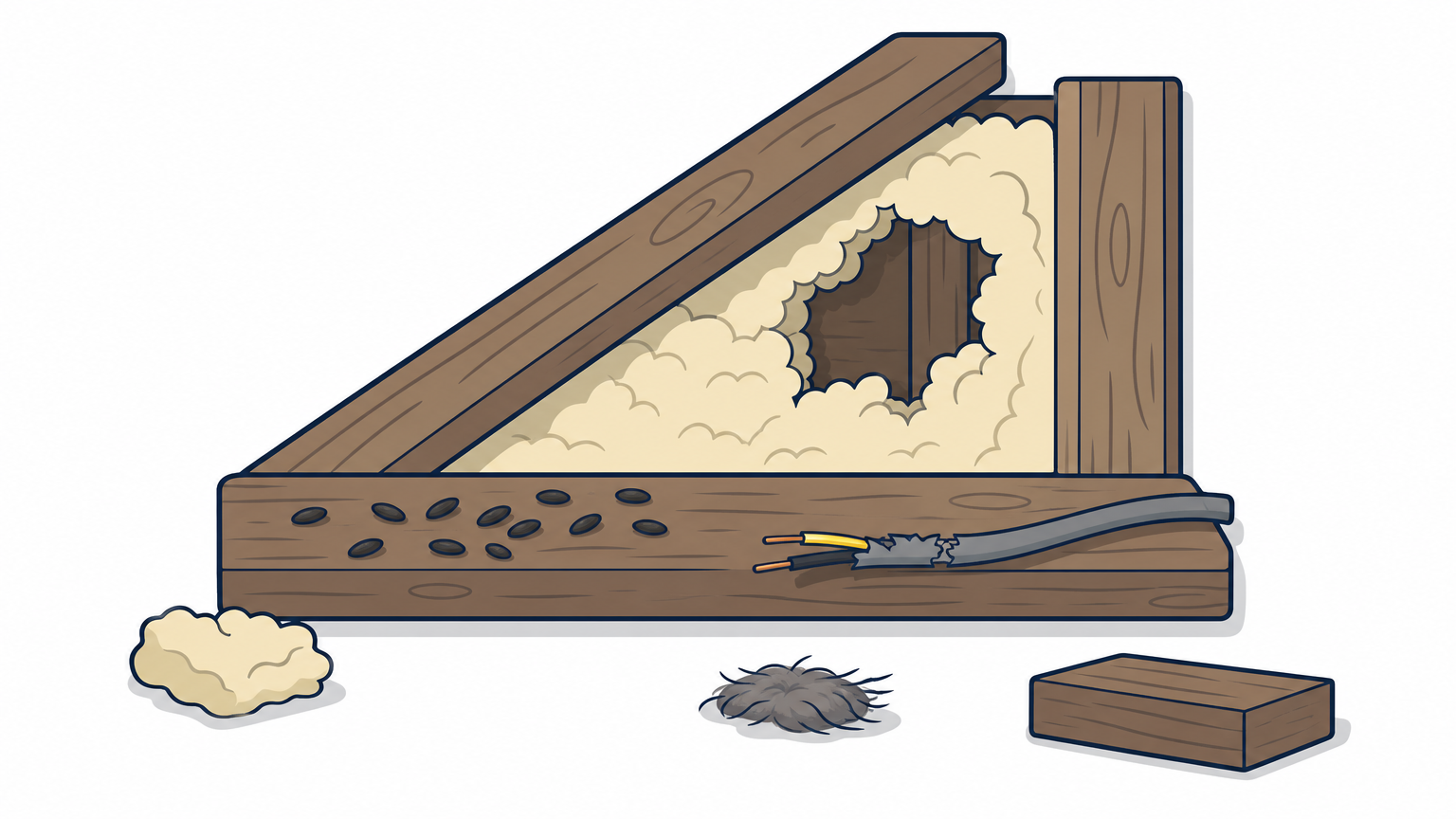
- Droppings shaped like dark grains of rice, clustered near food storage, under sinks, or along baseboards
- Gnaw marks on wood, wiring, plastic bins, or door corners
- Grease marks or dark smudges along walls where rats repeatedly brush against a surface
- Nesting material like shredded insulation, paper, or fabric tucked into attics or wall voids
- Burrows near the foundation, under sheds, or in dense landscaping
- A strong ammonia odor in enclosed spaces like crawlspaces or closets
Finding even two or three of these usually means you're dealing with more than one rat. Rats reproduce fast, a single female can produce six litters a year, so what looks like a small problem in week one can turn into a full colony by month two.
Health and property risks that shouldn't wait
Rats aren't just unsettling to have around, they're a genuine health and safety issue. They carry pathogens linked to hantavirus and salmonella , and their urine and droppings can contaminate stored food and countertops without you realizing it. According to the CDC, rodent-borne diseases spread through direct contact, contaminated food, or even inhaling dust from droppings, which is exactly why DIY cleanup without proper protection can make things worse, not better.
If you're seeing droppings near food or hearing movement in the walls at night, it's time to call a professional, not wait another week.
Property damage adds up just as fast. Rats gnaw constantly to keep their teeth from overgrowing, and they don't discriminate between wood framing, PVC piping, and electrical wiring. That last one matters most: chewed insulation on wiring is a documented cause of house fires, and it's not something a homeowner can fully inspect without pulling open walls.
When DIY traps aren't cutting it
Snap traps and bait stations from the hardware store can catch a rat or two, but they rarely solve an active infestation. Without sealing the entry points rats are using, you're just removing individuals while more come in behind them. Trapping also does nothing to address nests already established in your attic or walls, which is where rodent exclusion services come in. That's your signal to move past store-bought fixes and start looking for rat pest control near you that treats the whole problem, not just the visible symptoms.
Step 1. Search for local rat exterminators near you
Start with a plain search for pest control near me rats , or a roundup of rat exterminators serving your area, and pay attention to what actually shows up. Google's local pack pulls from your address, so the results you see should be companies that actually service your neighborhood, not a national call center that dispatches whoever's closest. Look for a local phone number , a real street address, and a service area map that names your city specifically, whether that's Mesa, Gilbert rodent removal, Chandler, or Queen Creek.
Read reviews with a critical eye
Star ratings alone don't tell you much. Read the actual text of recent reviews, especially ones from the last six months, and look for mentions of rats specifically rather than general pest control. A company with hundreds of five-star reviews about ants but almost nothing about rodents may not have the exclusion experience you need.
- Search terms to try : "rat exterminator near me," "rodent control [your city]," "attic rat removal"
- Review sites to check : Google Business Profile, Yelp, Better Business Bureau
- Red flags in reviews : complaints about no-shows, vague pricing, or rats returning within weeks
- Green flags in reviews : mentions of entry-point sealing, follow-up visits, or attic inspections
A handful of detailed reviews about rat removal tell you more than a hundred generic five-star ratings ever will.
Narrow your list to three or four companies
Once you've got a shortlist, resist the urge to book the first one that answers the phone, and take a minute to review how to pick the right rat exterminator. Call each company and ask a simple question: do they specialize in rodent exclusion, or do they mainly handle insects and treat rats as an afterthought? The answer usually tells you fast whether you're talking to a generalist or a company that actually understands rat behavior, entry points, and how Arizona's climate affects nesting patterns. A Phoenix, AZ pest control team that has worked the metro area for years will know which neighborhoods deal with roof rats coming down from palm trees versus Norway rats coming up through foundations, and that local knowledge shapes how they treat your property.
Step 2. Vet licensing, insurance, and experience
Narrowing your list is only step one. Before you let anyone near your attic or foundation, confirm they're actually licensed to do the work. In Arizona, pest control companies must hold a license from the Arizona Structural Pest Control Commission , and you can verify any license number directly on the Commission's public database. If a company can't produce a license number on request, that's a hard stop, not a minor detail.

Confirm insurance covers your property
Licensing tells you a company is legally allowed to treat pests. Insurance tells you what happens if something goes wrong. Ask specifically for proof of general liability insurance and, if technicians will be going into attics or crawlspaces, workers' compensation coverage too. Without it, you could be on the hook for injuries or property damage that happen on your own land during treatment.
A licensed, insured exterminator protects your home twice: once from the rats, and once from liability if something goes sideways.
Ask about rat-specific experience, not just years in business
A company can be in business for fifteen years and still have limited rodent experience if their bread and butter is scorpions or termites. Ask direct questions before you book:
- How many rat exclusion jobs have you completed in the last year?
- Do your technicians receive specific training on rodent behavior and entry-point sealing?
- Can you provide references from customers with a similar rat problem?
- Do you carry specialized equipment for attic inspections, like borescopes or thermal cameras?
| What to verify | Why it matters |
|---|---|
| License number | Confirms legal authority to apply treatments in Arizona |
| Liability insurance | Covers property damage during service |
| Workers' comp | Protects you if a technician is injured on-site |
| Rat-specific job count | Signals real exclusion experience, not general pest work |
Companies that hesitate to answer these questions, or get vague about numbers, usually haven't done the volume of rat work they're claiming. A team that's handled dozens of exclusions across Mesa and the surrounding valley will answer without pausing, because they track this information as a matter of routine business.
Step 3. Compare treatment plans, pricing, and guarantees
Once you've confirmed licensing and experience, it's time to get real numbers in front of you. Pricing for rat control varies widely depending on the size of your property, how many entry points need sealing, and whether the infestation has spread into walls versus just the attic. A free estimate should always be part of the deal. Any company that wants payment before they've even seen your property isn't worth your time.
Understand what's actually included in the price
Request a written breakdown, not a verbal ballpark. A solid rat treatment quote should separate the inspection, the exclusion work, the initial trapping or removal, and any follow-up visits. Some companies bundle everything into one flat fee, others charge per entry point sealed. Neither approach is wrong, but you need to know which one you're getting so you can compare apples to apples across quotes.
- Inspection fee : often waived or credited toward the total if you book service
- Exclusion work : sealing gaps, vents, and rooflines where rats are entering
- Trapping and removal : initial setup plus any dead rat disposal
- Follow-up visits : check-ins to confirm rats aren't re-entering
- Sanitation or attic cleanup : optional but worth pricing if droppings have contaminated insulation
Get every quote in writing before you sign, verbal promises about pricing tend to change once the work starts.
Ask what happens if rats come back
A guarantee is where cheap companies quietly cut corners. Ask directly: if rats return within 30, 60, or 90 days, do you come back at no extra charge? Reputable companies stand behind exclusion work because sealing entry points properly should keep rats out for good. If a company won't guarantee their own work, that tells you they're not confident in it either.
| Plan type | Best for | Typical guarantee |
|---|---|---|
| One-time exclusion | Isolated infestation, few entry points | 30-90 day return guarantee |
| Recurring monthly/bimonthly | Ongoing prevention, older homes | Continuous coverage while active |
| Combined pest + rodent plan | Properties with multiple pest issues | Varies by provider |
Compare at least two or three written quotes, along with the rat treatment options worth pricing out, before deciding. The cheapest option often skips exclusion work entirely, and the most expensive one isn't always the most thorough. Look for the plan that matches what your property actually needs.
Step 4. Schedule an inspection and ask key questions
Once you've picked a company based on licensing, experience, and pricing, book the in-person inspection before you sign anything. Photos and phone descriptions only tell half the story. A technician needs to walk your attic, check your foundation, and trace the paths rats are actually using to get in and out. Anyone willing to quote a final price without setting foot on your property is guessing, not inspecting.
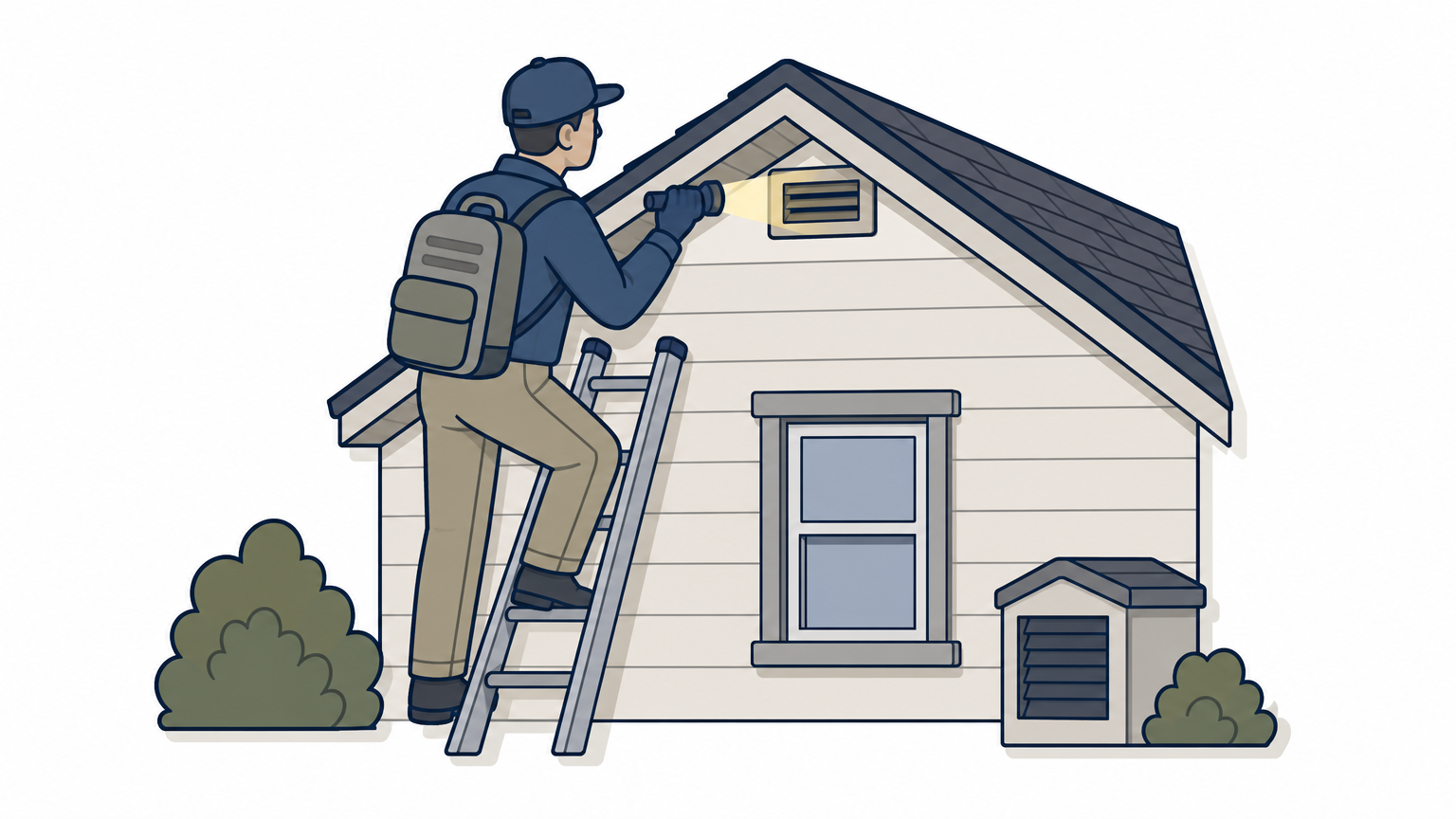
What a thorough inspection actually covers
Good technicians don't just glance at the attic and call it done. They check the roofline, vents, gaps around utility lines, and the foundation perimeter, since rats can squeeze through openings as small as a quarter. Expect the inspector to spend real time documenting entry points, not just confirming rats are present.
- Attic and crawlspace : nesting material, droppings, gnaw marks on wiring or ductwork
- Exterior perimeter : gaps under doors, vents without screens, gaps around plumbing penetrations
- Roofline : loose shingles, chewed fascia boards, overhanging tree branches near the roof
- Foundation : burrows, cracks, or unsealed utility line entries
An inspection that skips your attic and roofline isn't a real inspection, it's a sales pitch with a flashlight.
Questions worth asking on-site
While the technician is there, ask questions directly instead of waiting for a written quote to explain everything. Direct answers on the spot tell you a lot about how much rat-specific experience you're actually dealing with.
- Which entry points did you find, and how will each one be sealed?
- What material do you use for exclusion, and does it hold up against rats chewing through it again?
- How many follow-up visits are included, and what happens if you find new activity?
- Will you remove existing nests and sanitize contaminated insulation, or is that a separate service?
- What's your estimated timeline from first visit to a rat-free home?
A technician who answers these without hesitation, and points to specific spots on your property while explaining the plan, is showing you real expertise rather than a script. If the answers feel vague or rushed, that's worth factoring into your final decision before you commit to a contract.
Getting back to a rat-free home
Rats don't fix themselves, and waiting rarely makes the problem smaller. You now know the signs that mean it's time to call a professional, how to vet licensing and insurance , and what a real inspection should cover before you sign anything. That knowledge puts you ahead of most homeowners who just book the first name that shows up in a search.
Finding a licensed exterminator who treats the whole problem, not just the traps, is what separates a permanent fix from a repeat visit in six months. Trust your instincts if a company hesitates on guarantees or rushes through your attic without explaining what they found.
If you're in Mesa, Gilbert, Chandler, Queen Creek, or anywhere else in the Phoenix metro area, reach out to Polite Pest Co. for professional rat removal and exclusion and a free inspection, and get your home sealed up before the next litter moves in.