

Beehive Exterminator near Me: 5 Options, Costs, and Reviews
You found a hive on your property, and you want it gone without getting stung. Searching for a beehive exterminator near me usually means you need answers fast: who is licensed, what it costs, and whether anyone will remove bees for free.
Here is the short answer. Your five main options are live relocation by a beekeeper, a licensed pest control company, a bee-removal specialist, a free removal volunteer, and DIY treatment. Professional removal typically runs from $75 to $500 , depending on hive size and location. Free options exist, but they often skip the cleanup. Leftover honeycomb can draw ants, rodents, and new swarms. Never spray a hive yourself.
Below, we break down each option with typical costs, pros, cons, and what customers say in reviews. One note: Polite Pest Co. serves Mesa and the greater Phoenix area, not Palm Beach County. The licensing questions, pricing ranges, and red flags we cover apply to any provider you consider, wherever you live.
1. Licensed pest control company with bee removal
How it works
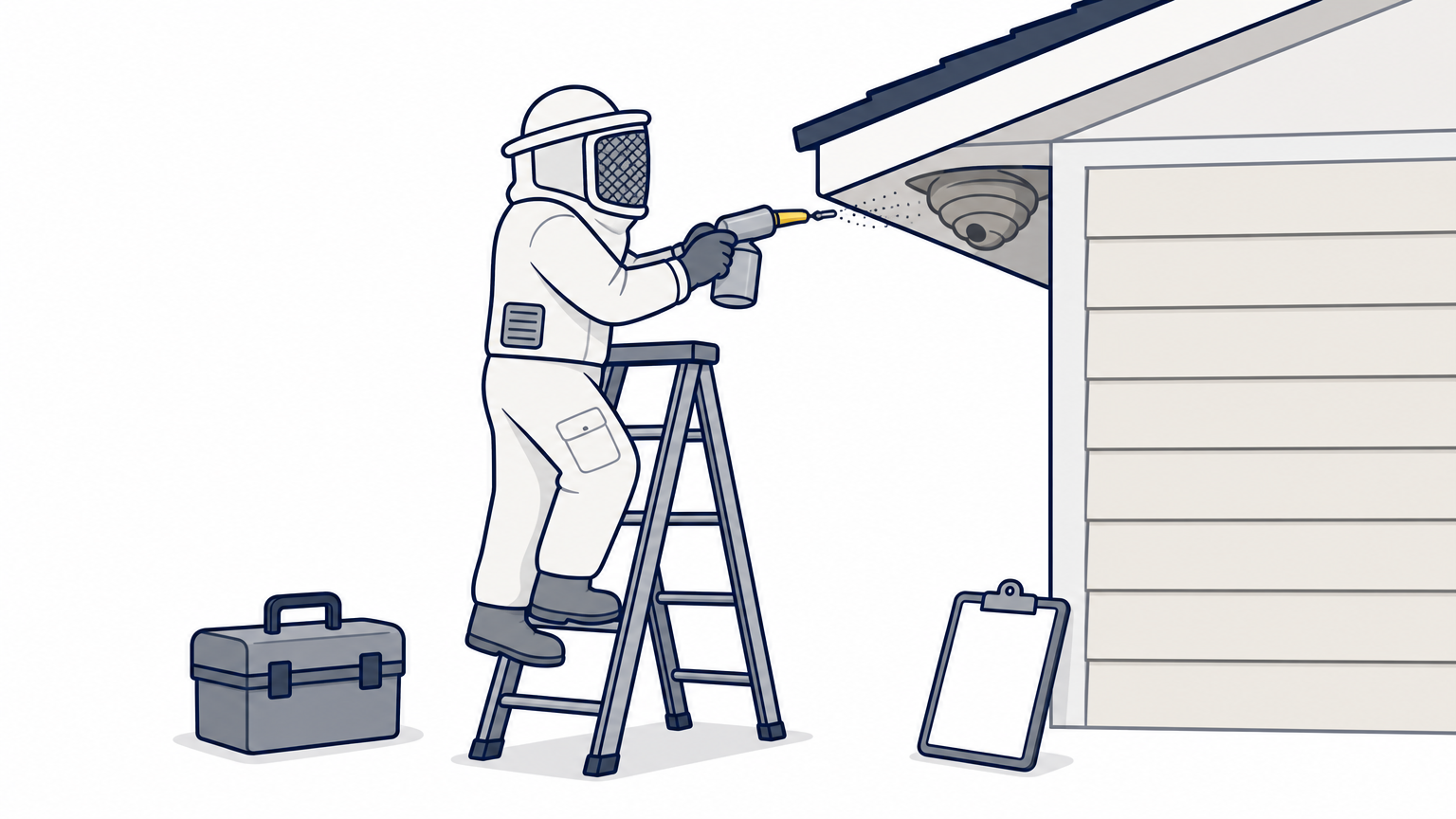
A licensed technician inspects the hive, identifies the species, and picks a treatment. Most crews apply a professional-grade insecticide dust to the colony, then return to confirm it is dead. Ask whether the comb gets removed , because many companies skip that step and leave it in the wall.
Best for
Start here if the hive is aggressive, sits inside a wall or attic, or you want a license and insurance behind the work. Anyone who types beehive exterminator near me and needs help this week will find these companies first. Same-week service is common, and insured crews carry the risk of stings and ladder work instead of you.
Typical cost
Expect $75 to $500 , with the price driven by access and what happens after the bees are gone.
| Situation | Typical range |
|---|---|
| Exposed nest on a tree or eave | $75 to $200 |
| Hive in a wall, soffit, or attic | $200 to $500+ |
| Comb removal and wall repair | Often quoted separately |
Pros and limits
Speed and accountability are the big wins. Licensed technicians can handle dangerous colonies, and most offer a warranty or free return visit if bees come back. The limit is that extermination kills the colony, so it is the wrong pick if you want the bees saved.
- Confirm the state license number and proof of insurance.
- Get comb removal and sealing of the entry point in writing.
- Skip anyone who quotes a price without seeing the hive or a photo.
A dead hive left inside your wall is still a problem, so pay for comb removal, not just the kill.
2. Local beekeeper offering live relocation
How it works
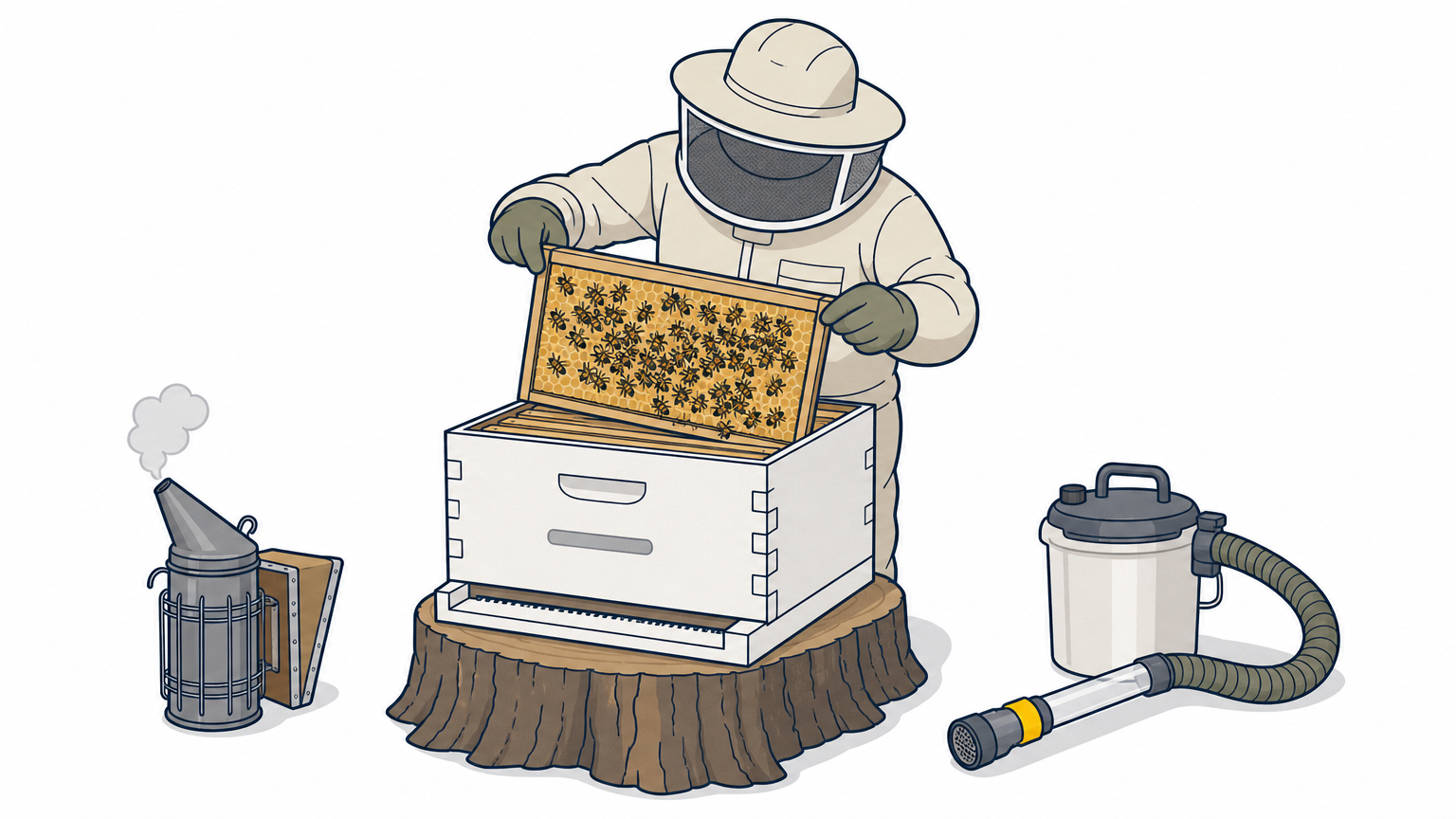
A beekeeper confirms the bees are European honey bees , then removes them alive. Wasps and hornets are not a fit. The usual process:
- Photo or site visit to confirm the species.
- Bees, queen, and comb lifted out by hand or bee vacuum.
- Entry point cleaned so leftover scent does not draw new swarms.
Best for
Pick this if you want the bees kept alive and the hive sits in a reachable spot like a tree, shed, or low eave.
Searching for a beehive exterminator near me often skips these folks, so try "swarm removal" and your county beekeepers association instead.
Typical cost
Many beekeepers charge $100 to $300 , and wall cuts cost more because of the labor involved.
| Job | Typical range |
|---|---|
| Swarm or exposed hive | Free to $150 |
| Hive inside a wall | $200 to $500+ |
Pros and limits
The colony survives , and a good beekeeper removes the comb so ants and rodents stay away. The trade-offs are slower scheduling and uneven insurance coverage.
- Ask whether they carry liability insurance.
- Ask who repairs the wall or soffit afterward.
Live relocation only works on honey bees, so confirm the species before you book.
3. Specialized bee and wasp removal company
How it works
A specialist handles only stinging insects, so the technician identifies the species on arrival : honey bee, wasp, hornet, or yellow jacket. Then comes the method.
- Honey bees: live removal or treatment, based on location.
- Wasps and hornets: treatment plus full nest removal .
- Follow-up visit to confirm activity has stopped.
Best for
Choose this when you cannot tell what is nesting on your property. Adding "wasp" to a beehive exterminator near me search surfaces these specialists, and they suit mixed infestations that beekeepers will refuse to touch.
Typical cost
Prices run $100 to $400 for most jobs, and walls and attics cost more.
| Job | Typical range |
|---|---|
| Exposed wasp or hornet nest | $75 to $250 |
| Accessible honey bee hive | $100 to $300 |
| Hive in a wall or attic | $250 to $500+ |
Pros and limits
Species knowledge is the main win, since the right method the first time means fewer return visits. The limits are minimum service fees and thinner coverage outside metro areas.
Hire the company that names the species before it names a price.
4. Free bee removal through volunteer beekeepers
How it works
Hobbyist beekeepers and local clubs keep swarm call lists. You send a photo and your address, and a volunteer decides if the bees are worth collecting. Most volunteers take only honey bees , and mostly swarms or exposed hives .
- Share photos and the exact location.
- Wait for a callback, often within hours in spring.
- The volunteer boxes the bees and leaves.
Best for
Choose this if a fresh swarm hangs from a branch, fence, or shed and you can wait a day. A search for a beehive exterminator near me returns paid quotes first, but swarm lists are where free help lives.
Typical cost
Usually $0 . Some volunteers accept $20 to $50 for gas, and it is polite to offer.
Pros and limits
The bees survive and your wallet stays closed. The catch is reliability. Nobody is obligated to show up , and volunteers rarely cut into walls, clean comb, or carry liability insurance. Settled hives often get refused.
Free removal works for swarms, not for hives built into your walls.
Have a backup plan, and call a paid provider if no one responds within 48 hours.
5. Trapping, exclusion, and DIY treatment
How it works
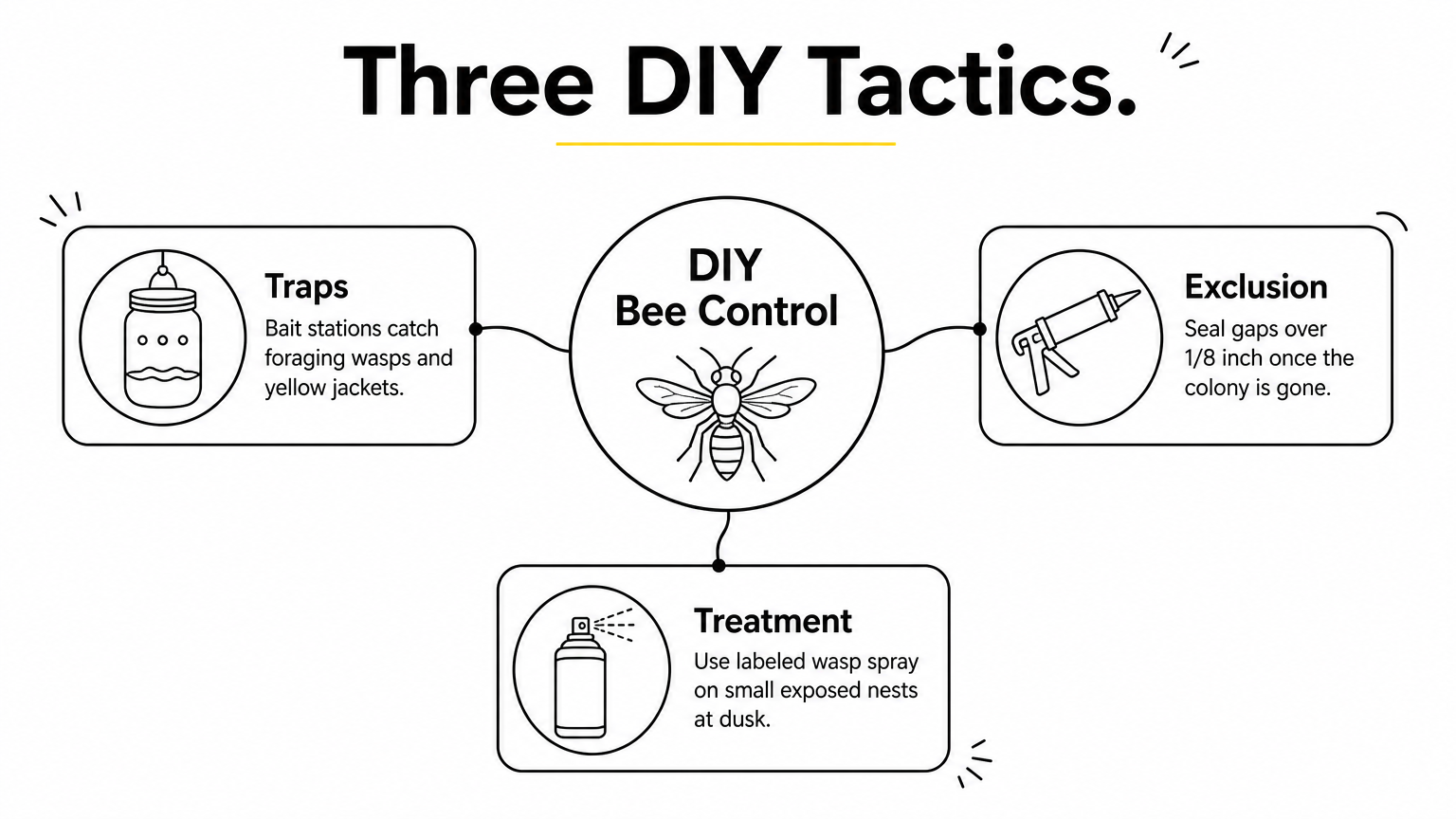
DIY covers three tactics, and each suits a different problem.
- Traps: bait stations that catch foraging wasps and yellow jackets.
- Exclusion: caulk, steel wool, or mesh over any gap wider than 1/8 inch once the colony is gone.
- Treatment: a labeled wasp spray on a small, exposed nest at dusk.
Best for
Treat this as the pick for small paper wasp nests and for sealing up after a pro finishes. If a beehive exterminator near me search feels like overkill for a palm-sized nest under your eave, DIY is reasonable. Honey bee hives are not DIY jobs.
Typical cost
Supplies run $10 to $50 . Wasp spray, a trap, caulk, and mesh cover most jobs. Protective gear adds a little more.
Pros and limits
It is cheap and immediate , and exclusion is the best way to keep bees from returning. The limits are real, though. Spraying a honey bee colony leaves dead comb and honey behind , which draws ants, rodents, and new swarms. Stings are also a risk, especially if anyone in your home is allergic.
Use DIY to prevent bees or fight small wasp nests, never to take on an established hive.
Choosing the right bee removal option
Your best choice comes down to the species and the location of the hive . Honey bees in a reachable spot suit a beekeeper or a volunteer. Wasps, hornets, and colonies inside walls call for a licensed professional . DIY belongs to small wasp nests and sealing gaps afterward, never an established hive.
Before you book anyone from a beehive exterminator near me search, verify the license and insurance. Insist on comb removal and a sealed entry point , and get a price only after the provider has seen the hive or a photo. Then act quickly, because a growing colony gets harder and costlier to remove.
If you live in Mesa, Chandler, Gilbert, or the greater Phoenix area, you can request a free, no-obligation bee estimate from Polite Pest Co. You get over a decade of local experience and bee treatment from a team that stands behind its work.