

Pest Control for the Home: 7 Options for Mesa Homeowners
The best pest control for the home pairs prevention you handle yourself with professional treatment where it counts. For most Mesa and Phoenix-area homeowners, a recurring professional plan is the strongest single pick. Do-it-yourself sprays and baits suit light, seasonal problems, and a one-time specialist visit is the right call for termites, bed bugs, scorpions, and rodents. A good option matches your pest, your property size, and the time you want to spend.
Most people start the same way. You see ants or a spider, buy a spray, and weeks later the problem is back. Pest control at home fails when the product does not match the pest, or when you treat the insects but leave the food, water, and entry points that draw them in. The desert adds its own problems, from scorpions and termites to pack rats and roaches.
This guide walks through seven options, and each one gets the same three checks: how it works, who it suits, and what it costs. We run a local pest control company in Mesa, so we say plainly where a spray bottle is enough and where it is not. A comparison table and a short decision list close the guide.
1. Recurring professional pest control plan
How it works

A recurring plan sends a technician to your home on a fixed schedule, so pests meet a treated barrier before they settle in. Monthly and bimonthly plans are the two common rhythms, and Polite Pest Co. offers both. A good visit starts by identifying what is active, then treats entry points, the exterior perimeter, and the spots where pests hide.
Repeat visits matter because one treatment does not last. New pests keep arriving from neighboring yards, washes, and desert lots. Monsoon season, which runs from mid-June through September, pushes insects toward moisture inside the house. A schedule catches new activity early , before you see it in the kitchen.
A recurring plan works because pests keep arriving, so the protection has to keep arriving too.
Who it suits
This option suits homeowners who want pest control at home handled without thinking about it . Families with young children or pets benefit most, because a technician applies the products and you never store or mix them. It also fits homes with repeat ants, spiders, roaches, or scorpions.
Larger lots are another good match, since perimeter work on a big property takes hours. A recurring plan is overkill for a single wasp nest or a one-week ant trail. For those, options 2 and 4 are a better fit.
Cost and trade-offs
Polite Pest Co. sets recurring plan rates by property size , and the estimate is free with no obligation. Compare annual totals, not per-visit prices. A monthly schedule means 12 visits a year and a bimonthly one means 6, so the same per-visit price costs twice as much per year on the monthly plan.
The trade-off is commitment. A plan does not fix leaks, clutter, or open gaps, so you still need options 5 and 6. Before you sign with any company, ask these questions:
- Which pests are covered, and which cost extra?
- Is interior treatment included, or only the exterior?
- What happens if pests return between visits?
- Which product names and EPA registration numbers will be used at your home?
Polite Pest Co. is a small, family-owned company run by Erick Estrada, with over a decade of experience serving Mesa, Chandler, Gilbert, Queen Creek, Phoenix, and Scottsdale.
2. One-time professional treatment for a specific pest
How it works
A one-time treatment targets one problem. The technician identifies the species, finds where it lives and travels, and treats with products and equipment that homeowners generally cannot buy . University extension guidance says the same: severe or widespread infestations call for a company with that equipment.
The pest decides the method. Termites need soil treatment or bait stations, bed bugs need heat or steam, and rodents need sealing plus trapping. The table shows where professional work beats the store aisle.
| Pest | Why DIY often falls short | What a professional does |
|---|---|---|
| Termites | The colony is hidden, and soil treatment needs special equipment | Non-repellent insecticides and baiting stations, plus inspections |
| Bed bugs | They hide in seams and frames and survive months without feeding | Inspection, then heat or steam where appropriate |
| Rodents | Trapping without sealing lets new animals move in | Exclusion, trapping, and prevention for pack rats, house mice, deer mice, and roof rats |
| German roaches | They hide behind appliances and breed fast | Bait systems and insecticides matched to the infestation |
| Scorpions | They shelter in walls and landscaping and are hard to control | Dedicated scorpion control service |
| Ants | Sprays kill the workers you see, not the colony | Species identification, sealed entry points, and targeted treatment |
For bed bugs, heat in the 120 to 140°F range and temperatures below 0°F both kill them. Reaching those temperatures through a whole room is the hard part, and that is why this job rarely works as a DIY project.
Call a professional for any pest that hides inside walls, soil, or mattress seams, because that is where DIY products cannot reach.
Who it suits
A specialist visit suits anyone with one clear, stubborn problem . That includes swarming winged termites, bites you cannot explain, droppings in the attic, or scorpions inside the house. It also suits homeowners who tried a store product twice and saw the pests return.
Scorpion stings need a note of caution. Arizona's bark scorpion can cause serious symptoms, especially in small children. If someone is stung and has symptoms beyond local pain, call Poison Control at 1-800-222-1222 or seek medical care.
Cost and trade-offs
Pricing depends on the pest, the size of the property, and how far the infestation has spread. A termite inspection costs far less than termite damage, and homeowners insurance generally does not cover that damage. Polite Pest Co. gives free, no-obligation estimates , so you can compare the quote against what you have already spent on DIY products.
Expect follow-up. Bed bugs and roaches rarely clear in one visit, so ask how many return visits the price includes. The recurring plan rates described in option 1 do not apply to one-time work, so ask for that quote separately.
3. DIY perimeter sprays and granules
How it works
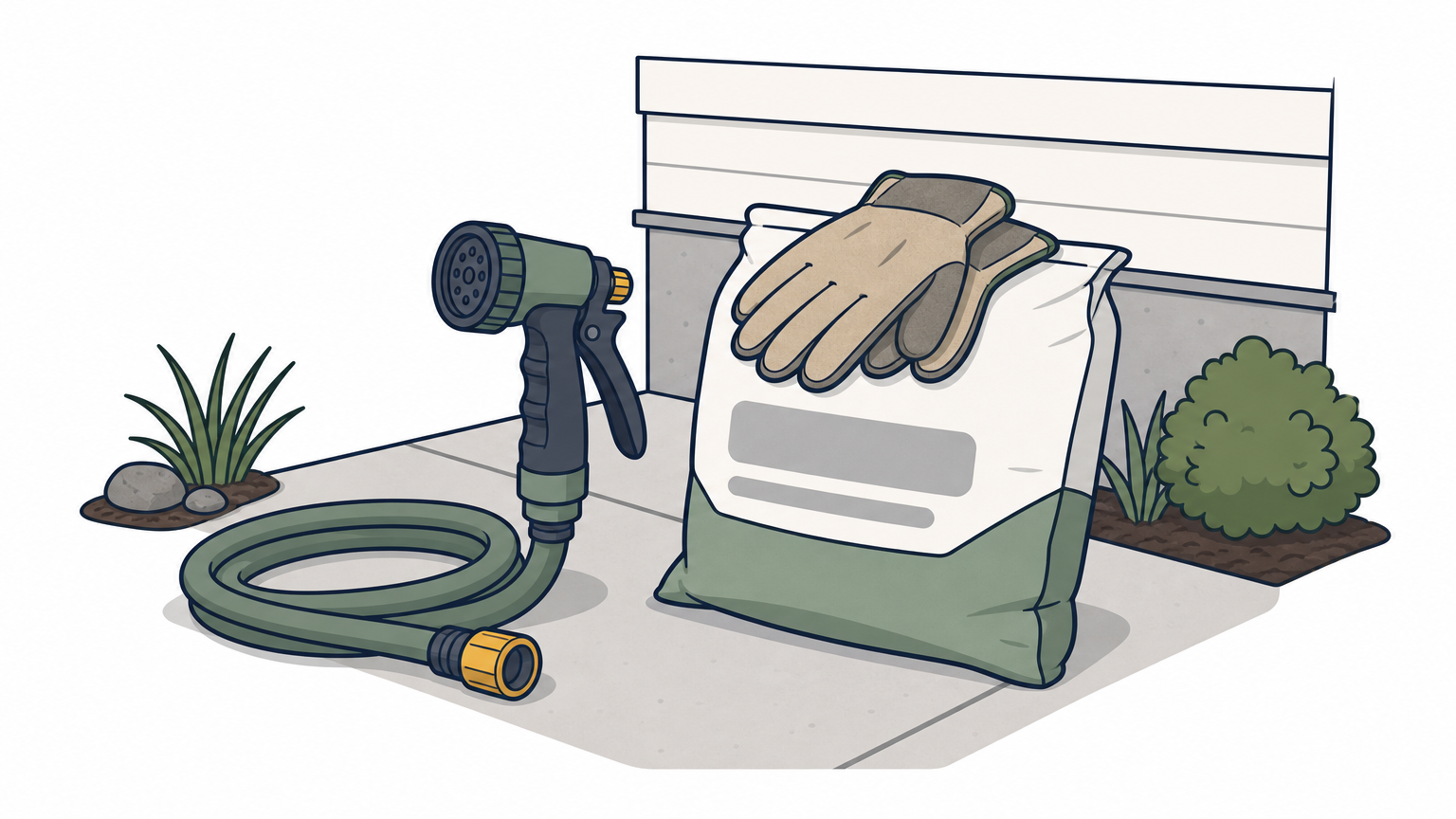
You apply a ready-to-use insecticide in a band around the foundation, doorways, window frames, and garage door. Pests crossing the band pick up the product. Common active ingredients on store shelves include bifenthrin, permethrin, deltamethrin, and cyfluthrin , and the EPA advises using ready-to-use products whenever possible so you never mix concentrates.
The formulation controls where you can use it. This table sums up the common types.
| Formulation | Best use | Watch for |
|---|---|---|
| Ready-to-use spray | Perimeter band, door and window frames | Use indoors only if the label allows it |
| Granules | Lawn edges and planter beds | Keep pets and children off until the label says it is safe |
| Dust | Cracks, wall voids, behind outlet plates | Leaves residue, and you need a respirator when applying |
| Aerosol or fogger | Cracks and crevices | The EPA says to use fogging devices only when absolutely necessary |
| Concentrates (EC, wettable powder) | Outdoor use on most labels | Mixing mistakes are easy to make |
Apply products to targeted locations , not across a whole room. Never carry an outdoor product indoors, because chemicals made for outdoor use can stay toxic longer inside. The EPA's do's and don'ts of pest control covers this in plain terms.
Treat the edges of your home, not the whole house, and follow the label exactly.
Who it suits
Perimeter sprays suit homeowners with light, seasonal pressure , such as crickets in fall, ants after a rain, or spiders around the patio. They also suit people who enjoy yard work and can spend an hour on a calm morning with a hose-end sprayer or a pump sprayer.
They are a poor fit for households with crawling toddlers or pets that roam freely and chew things. They also do not help with termites, bed bugs, or rodents.
Cost and trade-offs
The upfront cost is low , usually a bottle or bag plus a sprayer, and it is the cheapest way to start. The real costs come later. Residual products wear off, so you buy and apply again, and your own hours add up across a season.
The label sets the repeat schedule. Some scorpion band treatments, for example, are retreated every 10 to 14 days, according to one university extension fact sheet, so check yours. Using twice as much product does not work twice as well and can endanger your family. If you find yourself reapplying every few weeks, switch to option 1.
4. DIY baits, gels, and traps
How it works
Baits work by letting insects carry the poison home. Foragers eat a slow-acting bait and bring it back to the nest, which can wipe out a colony that a spray would only thin. Gel baits and bait stations work for ants and roaches. For mice and rats, snap traps do the job.
The EPA calls baits a first line of chemical defense once you have taken preventive steps. They carry low exposure risk as long as they stay out of reach of children and pets. Use these placement rules:
- Put dabs of ant gel directly on foraging trails, not in a pile.
- Do not spray repellent insecticide near bait. It makes insects avoid it.
- Place roach bait behind appliances, under sinks, and inside cabinet corners.
- Set snap traps along walls, with the trigger end against the wall.
- Use sticky traps to find where roaches and spiders gather, not as the whole treatment.
Skip ultrasonic or sound-emitting devices. University extension guidance notes that they have not been scientifically proven to work.
A bait that the pest carries back to the nest beats a spray that only kills what you can see.
Who it suits
Baits suit renters and homeowners with small, visible problems : an ant line along the kitchen counter, a few roaches under the sink, or one mouse in the garage. They are also the best DIY choice when children and pets live in the home, because the active ingredient stays inside the station.
Rodent trapping needs a safety habit. Deer mice can carry hantavirus. Do not sweep or vacuum dry droppings. Wet them with disinfectant first, wear gloves, and wipe them up.
Cost and trade-offs
Baits and traps cost little, but they are slow and need patience . Ant baits can take days to collapse a colony, and you must keep replacing them. They also do not stop new pests from arriving. If you trap three mice and a fourth appears, the home has an open entry point.
That is the usual limit. Baits handle the insects already inside, while sealing handles the ones still outside, which is option 5. For German roaches, a store bait often fails when the population is large, and a professional roach bait system is the next step.
5. Sealing entry points and exclusion
How it works
Exclusion means closing the gaps pests use to get in. It is the most durable form of pest control because it needs no repeated treatment. You inspect the house inside and out, then seal what you find.
| Where to look | What to use |
|---|---|
| Cracks around cabinets and baseboards | Caulk |
| Gaps around pipes under sinks | Steel wool, then caulk |
| Holes in walls or soffits | Wire mesh |
| Bottoms of exterior doors | Door sweeps and fresh weatherstripping |
| Windows, attic vents, crawl space vents | Intact screens |
| Weep holes in brick facades | Screening over the openings |
Mice can squeeze through gaps of about a quarter inch, so small is not safe. Walk the foundation and the roofline slowly, and check where utility lines enter the house. The EPA also suggests checking packages and boxes for pests before you carry them inside.
If a gap lets in light or air, assume it lets in pests too.
Who it suits
Sealing suits every homeowner , because it supports every other option on this list. It matters most for people with rodent or scorpion trouble, where treatment alone never holds. It also suits owners of older homes, where settling has opened gaps around doors, windows, and pipes.
Roof work and large gaps in stucco or tile are different. If you need a ladder at the roofline or find damage you cannot repair safely, hire a contractor or ask your pest company to handle the exclusion work. Polite Pest Co. offers exclusion as part of its rodent control and exclusion service.
Cost and trade-offs
Materials are inexpensive, and a weekend with a caulk gun covers most single-story homes. The real cost is your time and the thoroughness of the inspection . One missed gap leaves the door open, and pests find it.
Sealing also does not kill anything that is already inside. Seal after you have cleared out the existing pests with baits or a treatment, or you may trap them in your walls. Check your seals each year, because caulk cracks in desert sun and weatherstripping wears out.
6. Sanitation and moisture control
How it works
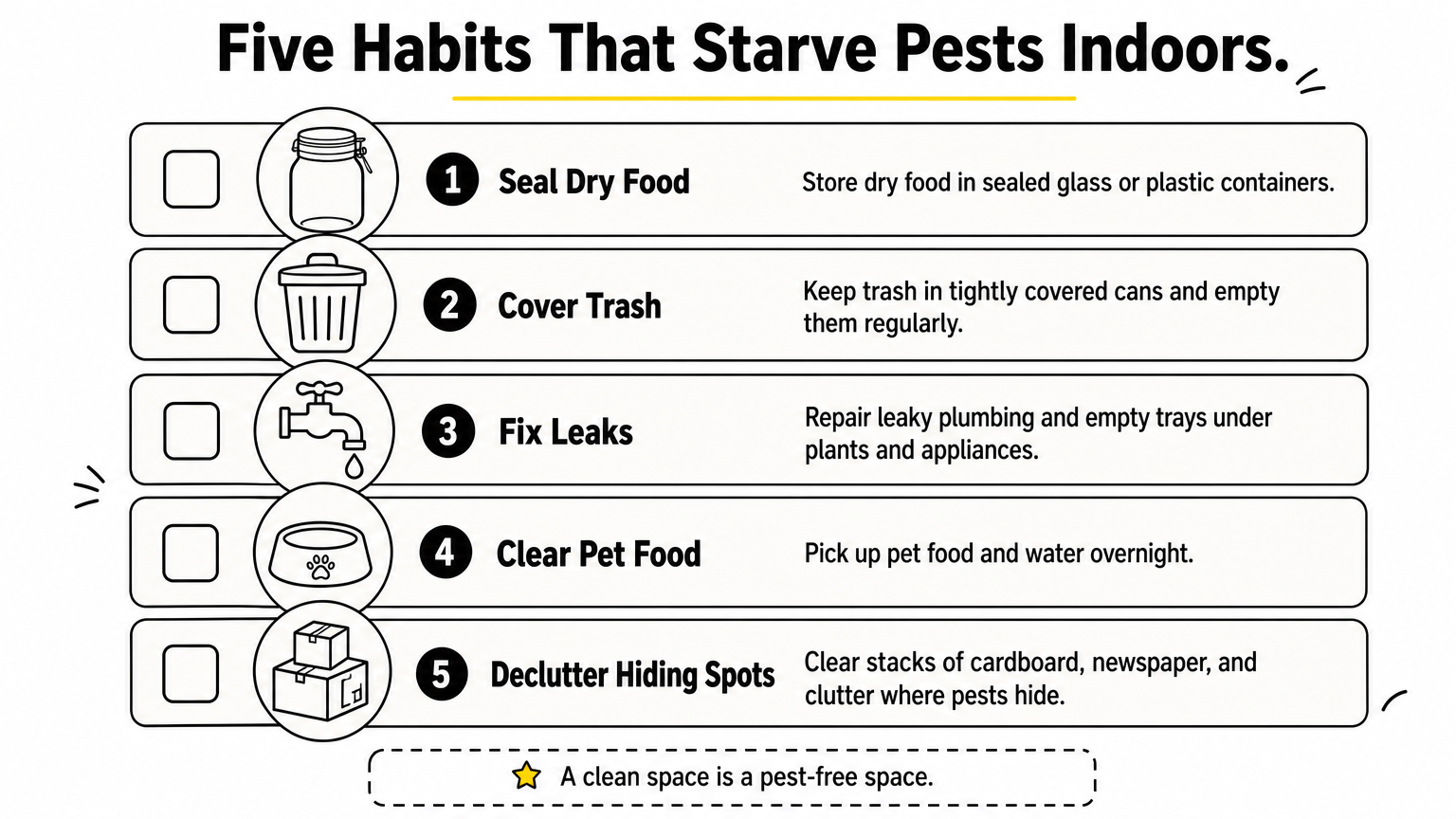
Pests need food, water, and shelter. Remove one of the three and populations drop. This is the least glamorous option and often the one that decides whether the others work. The EPA lists prevention first for that reason.
Indoors, the habits are simple:
- Store dry food in sealed glass or plastic containers.
- Keep trash in tightly covered cans and take it out regularly.
- Fix leaky plumbing and empty trays under plants and appliances.
- Pick up pet food and water overnight.
- Clear stacks of cardboard, newspapers, and clutter where pests hide.
Outdoors, dripping irrigation lines, leaky hose bibs, and pet water bowls draw insects in a dry climate. Move firewood away from the house, clear debris from the foundation, and trim branches that touch the roof. Crickets follow porch lights, so switch off lights you do not need.
In the desert, water is what pulls pests toward your house, so start with leaks.
Who it suits
Sanitation suits everyone , and it is the first step for anyone with pantry pests, drain flies, or roaches. It works best for people who can change habits, such as storing food differently or fixing a drip that has run for months.
It cannot solve everything. A spotless kitchen still has roaches if they live next door in a shared wall, and termites do not care how clean you are.
Cost and trade-offs
This option costs very little: containers, a trash can with a lid, a few plumbing parts. The time and consistency it demands are the real price.
For pantry pests, the fix is concrete. Freeze new dry goods for a week, or heat them in the oven at 130 to 150°F for half an hour, then store them in sealed containers. Throw out anything already infested and clean the shelf before restocking. For drain flies, scrub the gelatinous buildup from drains and flush them with boiling water. The limit is that sanitation prevents problems and does not end an active infestation, so pair it with option 3, 4, or 1.
7. Natural and low-toxicity products
How it works
Natural products use plant oils, diatomaceous earth, or boric acid instead of synthetic insecticides. Diatomaceous earth is a dry powder that damages the outer coating of insects crawling through it, and it works only while it stays dry. Boric acid works as a slow-acting stomach poison in baits. Botanical oil sprays mostly kill on contact.
Safe does not mean harmless. Diatomaceous earth dust irritates the lungs, so wear a mask. Boric acid still needs to stay away from children and pets. The EPA suggests asking your local cooperative extension office about low-risk options for your pest.
Natural products can help with light problems, but they are not a safe substitute for the right treatment.
Who it suits
Natural products suit homeowners who want lower-toxicity choices and have light pressure: a few ants, silverfish in a closet, or spiders on the porch. They also suit people with sensitivities who still want to do something themselves.
They are not a good fit for severe infestations. University guidance says that "green" products using plant oils have not been shown to give effective long-term control of bed bugs. If you want low-toxicity treatment with professional follow-through, ask about it directly. Polite Pest Co.'s spider control service uses eco-friendly solutions, for example.
Cost and trade-offs
Costs sit close to conventional DIY products, and some natural items are cheaper per application. The trade-off is durability and speed . Oils break down quickly, powders must be reapplied after cleaning or moisture, and results are less predictable.
Read labels as carefully as you would for any pesticide. "Natural" on the front says nothing about safe amounts, and the EPA's rules still apply: do not use more than the label says, and store products in their original containers.
How to choose between DIY and a pro for your home
Side-by-side comparison
The right choice depends on the pest, the severity, and your time. This table puts all seven options together.
| Option | Best for | Your effort | Cost pattern | Speed |
|---|---|---|---|---|
| 1. Recurring plan | Ongoing prevention | Low | Set by property size, spread across the year | Steady |
| 2. One-time treatment | One stubborn pest | Low | One quote per problem | Fast to moderate |
| 3. Perimeter sprays | Seasonal outdoor pests | Medium | Low upfront, repeated | Fast |
| 4. Baits and traps | Small indoor problems | Medium | Low | Slow to moderate |
| 5. Sealing | Every home | High, once | Low materials | Lasting |
| 6. Sanitation | Every home | Ongoing | Very low | Gradual |
| 7. Natural products | Light problems | Medium | Low | Variable |
Sealing and sanitation belong in every plan, and the other options depend on the pest.
What home pest control costs
No honest single number covers every home, because the price depends on pest type, property size, severity, and visit frequency . A one-time ant treatment on a small lot and a termite program on a large property are different jobs.
Compare options on annual cost. For DIY, add products, sprayers, replacement baits, and your hours. For a plan, multiply the per-visit price by visits: 12 for monthly, 6 for bimonthly. Also count the cost of getting it wrong, since an untreated termite problem is far more expensive than any plan.
The hardest pests to get rid of
Bed bugs, German roaches, termites, and scorpions top the list for Mesa homes. Bed bugs survive many months without a meal and hide in seams. German roaches breed fast and live behind appliances. Termites live in hidden colonies and need specialized treatment. Scorpions shelter in walls and landscaping and are difficult to control even for professionals.
All four share one trait: you cannot reach where they live. That is the line between DIY and professional work.
A quick way to decide
Run through these questions in order:
- Do you see swarming winged termites, bed bug bites, droppings in the attic, or scorpions indoors? Call a professional.
- Is it a small, visible problem, such as ants on the counter? Use baits, then seal and clean up.
- Do the same pests return every season? Move to a recurring plan.
- Do children or pets share the space, and you would rather not handle products? Hire a professional.
- Not sure what the pest is? Look it up in the Polite Pest Co. pest library, or get a free estimate and an identification before you buy anything.
Picking the right mix for your home
Good home pest control is layered. Seal the gaps, remove the food and water, use baits for small problems, and bring in a professional for anything that hides in walls, soil, or mattress seams. For most Mesa-area homes with repeat pests, a recurring residential pest control plan covers what DIY cannot.
If you want help choosing, request a free, no-obligation estimate from Polite Pest Co. You can also call (480) 331-5040, Monday to Friday, 8:00 AM to 4:00 PM. We are closed Sundays.