

Pest Insect Control near Me: 8 Top Local Exterminators
Typing pest insect control near me into Google usually means you already found something crawling where it shouldn't be. Maybe it's ants marching across your kitchen counter, scorpions showing up in the garage, or German roaches you can't seem to get rid of no matter what you spray. In the East Valley and greater Phoenix area, these problems aren't rare. They're part of living in the Sonoran Desert, and they get worse fast if you wait.
This list gets straight to the point: eight local exterminators serving Mesa, Chandler, Gilbert, Queen Creek, Phoenix, and Scottsdale who actually show up, treat the problem, and stand behind their work. We looked at response times, treatment methods, and recurring service options , because a one-time spray rarely solves a real infestation.
You'll find companies handling everything from scorpions and termites to bed bugs and rodents, with notes on pricing structure, service area, and what makes each one worth calling. Polite Pest Co. made this list too, built on more than a decade of treating Arizona homes, but you'll get honest comparisons across all eight so you can pick the right fit for your property and your budget.
1. Polite Pest Co. for Mesa and Phoenix homes
Polite Pest Co. tops this list because it covers nearly every pest problem an East Valley homeowner runs into, without passing you between three different specialists. The company has spent over a decade treating homes and businesses across Mesa, Chandler, Gilbert, Queen Creek, Phoenix, and Scottsdale, which matters in a region where scorpions, termites, and desert-specific bugs behave differently than they would anywhere else in the country.
What they specialize in
Starting with the basics, Polite Pest Co. runs general and recurring pest control plans on monthly or bimonthly schedules, targeting ants, spiders, roaches, and the German roach infestations that resist over-the-counter sprays. Beyond that, the company handles termite inspections and treatment, scorpion control, bed bug extermination in Mesa, gophers, bees, fleas and ticks, mosquitoes, rodents, and even snake fencing for properties backing up to desert washes. Weed control services for East Valley yards round out the service list, which is a detail most exterminators skip entirely. Having one company handle all of it means you're not scheduling four separate appointments for four separate problems.
Who it's best for
Homeowners dealing with recurring pest activity rather than a single one-off encounter get the most value here, since the bimonthly and monthly plans are built to stop reinfestation before it starts. Commercial property owners in the same service area also fit well, particularly restaurants, retail spaces, and offices that need discreet treatment scheduled around business hours. If you've already tried a big-box exterminator and the pests came back within weeks, this is the kind of local outfit that tends to catch what got missed the first time.
A pest control plan only works if it's built around your property's actual risk factors, not a generic quarterly spray.
Typical pricing
Pricing depends on property size and the pest pressure at the address, but every estimate starts free and with no obligation to sign up. Below is a rough sense of what East Valley homeowners typically see:
| Service Type | Typical Frequency | Price Range |
|---|---|---|
| General pest control | Bimonthly | Competitive, size-based |
| Recurring pest plan | Monthly | Lower per-visit rate |
| Termite inspection | One-time | Often free with estimate |
| Scorpion control | Add-on to base plan | Varies by risk level |
| Weed control | Seasonal | Promotional discounts available |
Because quotes are based on square footage and pest type rather than a flat rate, the fastest way to get an accurate number is to request a free estimate directly.
What to expect from service
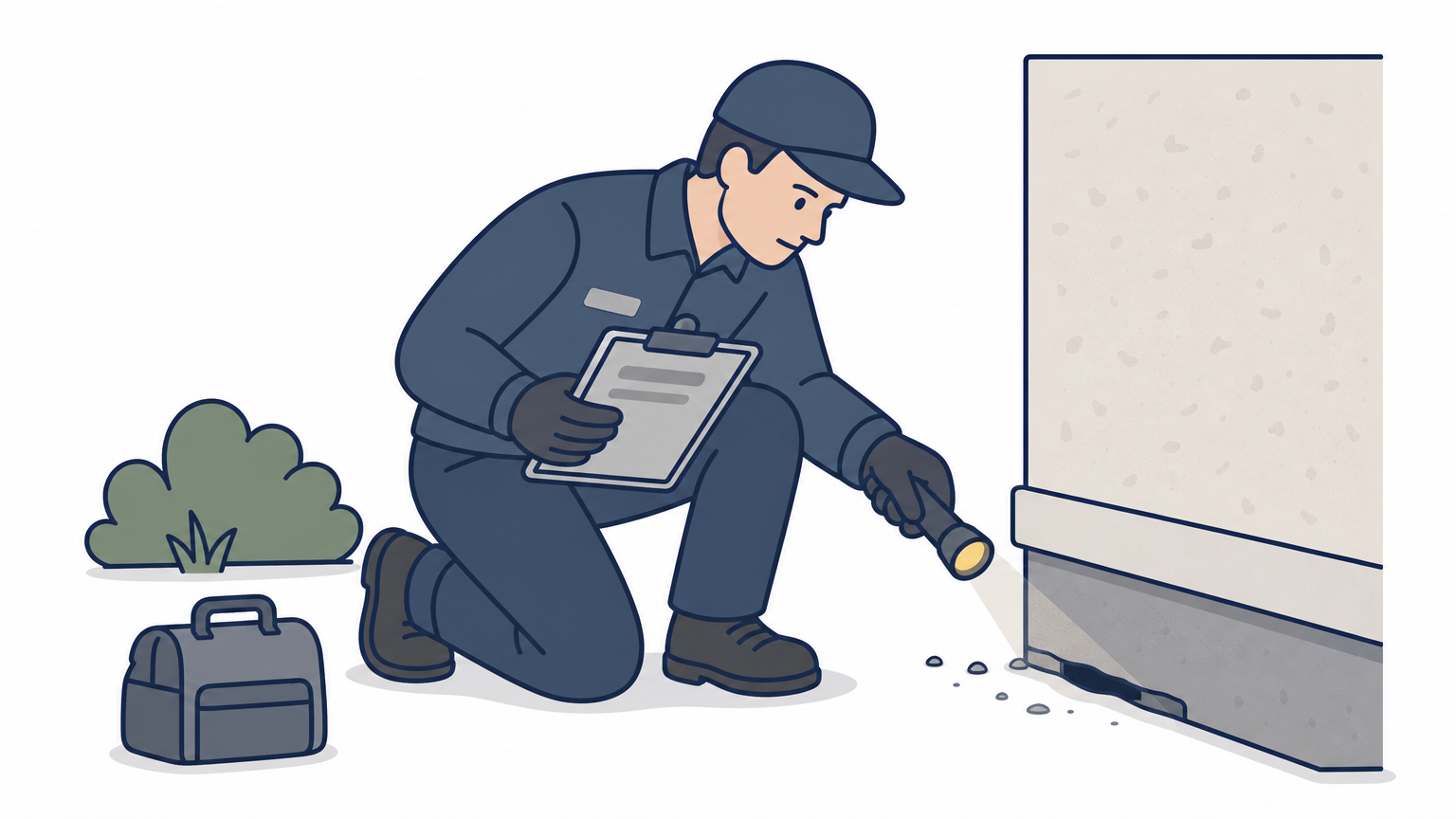
Once you book, a technician walks the property first, checking entry points, moisture sources, and nesting spots before applying anything. Treatment follows, targeted to the specific pest rather than a blanket spray, and most recurring plans include a callback guarantee if activity returns between scheduled visits. Technicians explain what they found and what they treated before leaving, so you're not left guessing why scorpions keep showing up near the same corner of the garage. For homeowners ready to stop dealing with pests reactively, you can request a free estimate through Polite Pest Co.'s home pest treatment plans and get a plan built around your actual property.
2. General pest control companies for everyday bugs
Most pest problems aren't dramatic. They're the occasional trail of ants near a windowsill or a spider web that keeps reappearing in the same corner of the patio. General pest control companies exist for exactly this kind of everyday bug pressure , and they're often the first call homeowners make before realizing they need something more specialized.
What they specialize in
These companies focus on the common household offenders: carpenter and sugar ant removal, spiders, crickets, silverfish, and occasional roach sightings that don't yet qualify as a full infestation. Treatment usually means a perimeter spray around the foundation, doors, and windows, paired with baiting for ants and web removal and black widow treatment. Most stick to a standard product lineup rather than customizing for desert-specific pests like scorpions or German roaches, which is where they start to fall short for Arizona properties.
Who it's best for
Renters and homeowners with light, occasional pest activity fit this category best. If you're seeing a handful of bugs a season rather than a recurring infestation, a general provider handles it without overcomplicating the job. Property owners chasing a budget-friendly option for basic upkeep also tend to land here first.
Occasional bugs need occasional treatment, but recurring infestations need a plan built around the specific pest.
Typical pricing
Expect quarterly service in the $40 to $80 range per visit, with some companies offering a flat annual contract instead. Pricing runs lower than specialized treatment because the scope is narrower.
What to expect from service
Service typically includes a quick exterior walk-through, a perimeter application, and a follow-up only if you call back between visits. Coverage rarely extends to termites, scorpions, or rodents, so if activity escalates beyond ants and spiders, you'll need to look elsewhere. General providers work fine as a baseline, but Arizona homes often need the desert-specific expertise covered further down this list.
3. Termite control and inspection specialists
Termites don't announce themselves. You won't hear them, and you often won't see them until a contractor pulls back drywall during a remodel and finds a hollowed-out stud. That's why professional termite inspections exist as a distinct category from general pest control, and why skipping this step costs Arizona homeowners real money every year.
What they specialize in
Specialists in this category focus almost entirely on subterranean termites, the species responsible for most structural damage across the Phoenix metro. Work includes soil treatment barriers , bait station termite treatment, and moisture monitoring around foundations, since termites need consistent moisture to survive in an otherwise dry climate. Inspections cover crawl spaces, attic framing, and any wood-to-soil contact points where colonies typically enter. Some companies also handle wood-destroying organism reports required for home sales, which general pest providers usually don't offer.
Who it's best for
Homebuyers closing on a property need this before signing anything, since a termite report is standard practice in most Arizona real estate transactions. Owners of homes over ten years old also benefit, particularly if the property has never had a baseline inspection, and it helps to understand how much of a threat termites really are in Phoenix. If you've spotted mud tubes along the foundation or noticed wood that sounds hollow when tapped, this is the specialist to call before damage spreads further.
A termite inspection costs a fraction of what structural repair does, and by the time you see damage, the colony has usually been active for years.
Typical pricing
Standalone inspections run $100 to $300 depending on property size, though many companies fold the cost into a treatment estimate. Full soil treatment or bait station installation typically runs $800 to $2,500, with annual monitoring contracts added on top.
What to expect from service
A technician inspects the perimeter, attic, and any accessible crawl space, documenting evidence of activity with photos. If termites are found, treatment follows with either liquid soil application or bait stations, depending on the property layout. Expect a written report either way, since that documentation matters for insurance and resale purposes down the line.
4. Bed bug extermination experts
Bed bugs travel. They hitch a ride in a suitcase after a hotel stay, tuck into a used couch, or ride home in a backpack from a friend's apartment. Once they're inside, they spread from the bedroom to the living room fast, which is one reason bed bug cases have climbed over the past decade and extermination has become its own specialty rather than a line item on a general pest visit.
What they specialize in
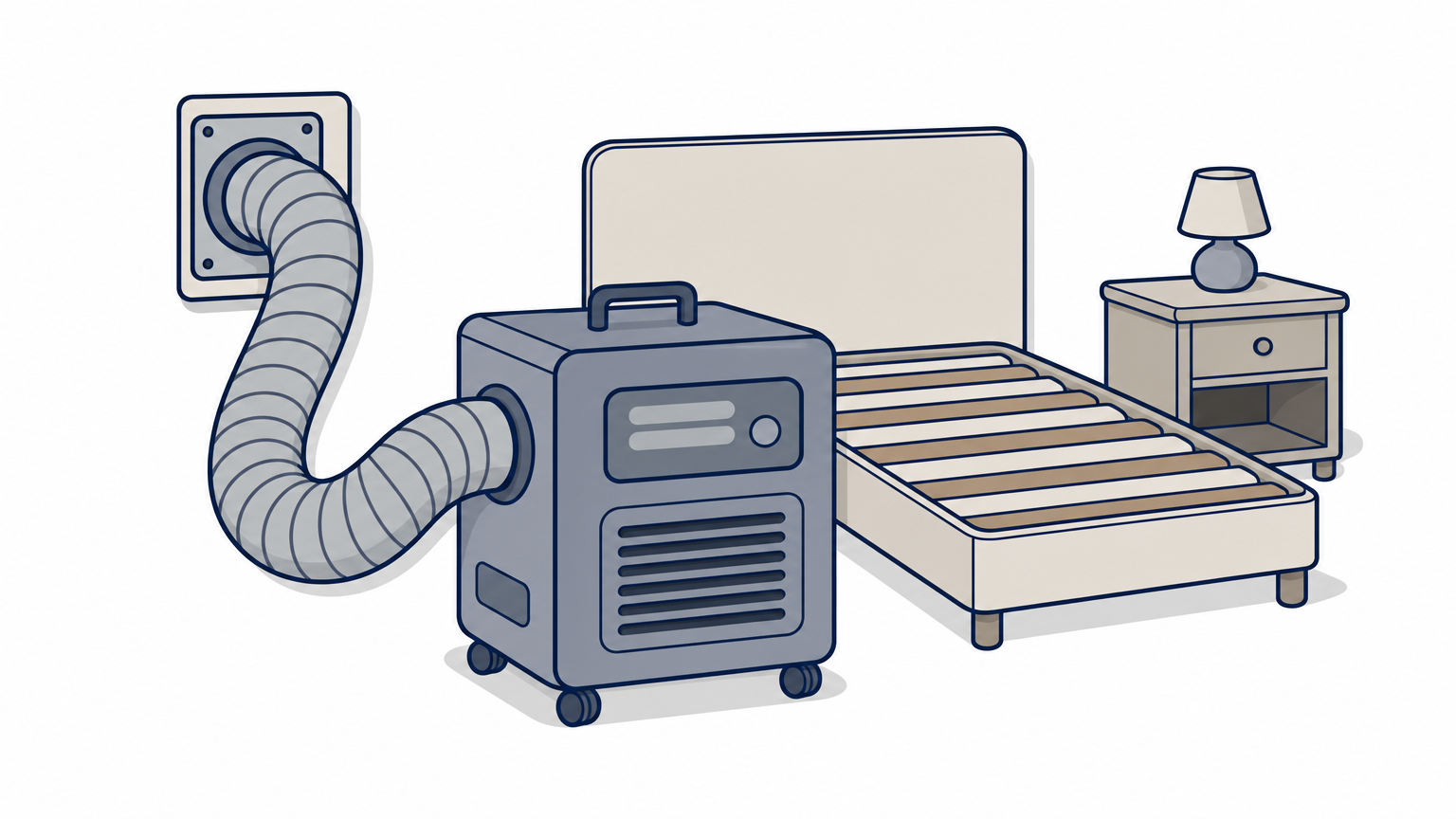
These specialists work almost exclusively with heat treatment and targeted chemical application , since bed bugs hide in mattress seams, baseboards, and even electrical outlets where a standard spray never reaches. Heat treatment raises a room to a lethal temperature for several hours, killing bugs and eggs in one pass without soaking furniture in pesticide. Chemical-only approaches usually require multiple visits spaced two weeks apart to catch newly hatched bugs between egg cycles.
Who it's best for
Homeowners who've already tried store-bought sprays and watched bites keep appearing need this level of treatment. Landlords managing a multi-unit property also fit here, since bed bugs move between shared walls and untreated units reinfest treated ones within weeks. If you're finding rust-colored spots on sheets or waking up with bites in a line, don't wait for the infestation to spread to a second room.
Bed bugs don't go away with a single spray, they go away with a treatment method matched to how they actually hide and breed.
Typical pricing
Heat treatment for a single room typically runs $300 to $600 , while whole-house treatment climbs to $1,500 to $3,000 depending on square footage. Chemical treatment plans cost less per visit but require two or three follow-ups to fully clear an infestation.
What to expect from service
A technician inspects mattresses, box springs, baseboards, and furniture seams before recommending heat or chemical treatment based on the infestation's spread. Expect prep instructions beforehand, since bagging clothing and clearing clutter improves treatment results. Most companies schedule a follow-up inspection two to three weeks out to confirm the infestation is fully gone before closing the job.
5. Rodent and wildlife control services
Scratching in the attic at night, chewed wiring, or droppings along the garage baseboard usually mean rodents got inside before you noticed. Rodent and wildlife control services handle a different problem than insects entirely, since mice and rats build nests, reproduce fast, and cause real property damage if they're left alone for more than a few weeks.
What they specialize in
Work in this category centers on exclusion, trapping, and sanitation rather than pesticide application. Technicians identify entry points around rooflines, vents, and utility penetrations, then seal them with steel mesh or foam that rodents can't chew through. Rat and mouse trapping and exclusion follows, using snap traps or bait stations placed along known travel paths, and some companies also remove nesting material and sanitize the affected area since rodent droppings carry real health risks. A handful of providers extend into broader wildlife work, handling raccoons, javelina, or bats that get into attics and crawl spaces around Phoenix-area homes.
Who it's best for
Homeowners hearing noise in the attic or finding droppings in the pantry need this service before the problem multiplies, and knowing how to find a good local mice exterminator matters, since a single breeding pair of mice can produce dozens of offspring within a few months. Older homes with gaps around the foundation or roofline are especially at risk, and so are properties backing up to desert washes where rodents move in from open space.
Sealing the entry points matters more than the traps themselves, because new rodents keep replacing the ones you catch.
Typical pricing
Inspection and initial trapping typically runs $150 to $400 , with exclusion work adding $300 to $1,500 depending on how many entry points need sealing. Ongoing monitoring plans run $40 to $75 per visit for homes with a history of activity.
What to expect from service
A technician inspects the attic, foundation, and roofline first, documenting every gap large enough for a rodent to squeeze through. Sealing and trap placement follow, with a return visit scheduled to check catch rates and remove trapped rodents before odor becomes a problem.
6. Mosquito, tick, and flea control providers
Evenings on the patio get miserable fast once mosquitoes move in, and pets dragging fleas or ticks inside turns a yard problem into a house problem. Mosquito, tick, and flea control providers focus on outdoor breeding grounds first, since none of these pests show up in numbers without standing water, shade, or a host animal nearby to sustain them.
What they specialize in
Treatment centers on yard barrier sprays applied to shrubs, grass, and shaded areas where mosquitoes rest during the day, along with larvicide treatments dropped into standing water sources like birdbaths, drainage areas, or unused pools. Flea and tick work usually pairs yard treatment with recommendations for pet care, since fleas breeding in carpet or yard debris keep reinfesting a home no matter how many times the dog gets treated. Some providers also install misting systems for properties with heavy mosquito pressure near canals or retention basins.
Who it's best for
Families who can't use the backyard after sunset without getting bitten fit this category first, along with pet owners noticing fleas after a park visit or a stay at a kennel. Properties near canals, golf courses, or retention basins deal with heavier mosquito pressure than the rest of the Valley and benefit most from a recurring treatment schedule rather than a one-time spray.
Mosquito and flea problems come back fast without breeding-source treatment, not just a spray on the day of the visit.
Typical pricing
Monthly mosquito treatment plans typically run $50 to $100 per visit , with seasonal contracts offered from spring through fall when activity peaks. Flea and tick yard treatment runs similarly, often bundled with mosquito service for properties dealing with both.
What to expect from service
A technician walks the yard identifying standing water and shaded resting spots before applying barrier treatment to vegetation and misting stations if installed. Expect a noticeable drop in activity within 48 hours, with monthly visits maintaining that reduction through the warmer months when mosquitoes and fleas breed fastest.
7. Scorpion and desert pest specialists
Bark scorpions don't care how new your house is. They squeeze through gaps the width of a credit card, climb stucco like it's nothing, and show up in bathtubs and kids' shoes across every part of the East Valley. Scorpion and desert pest specialists exist because general pest sprays barely touch them, and finding someone who treats scorpions specifically is usually what people mean when they search for pest insect control near me in this region.
What they specialize in
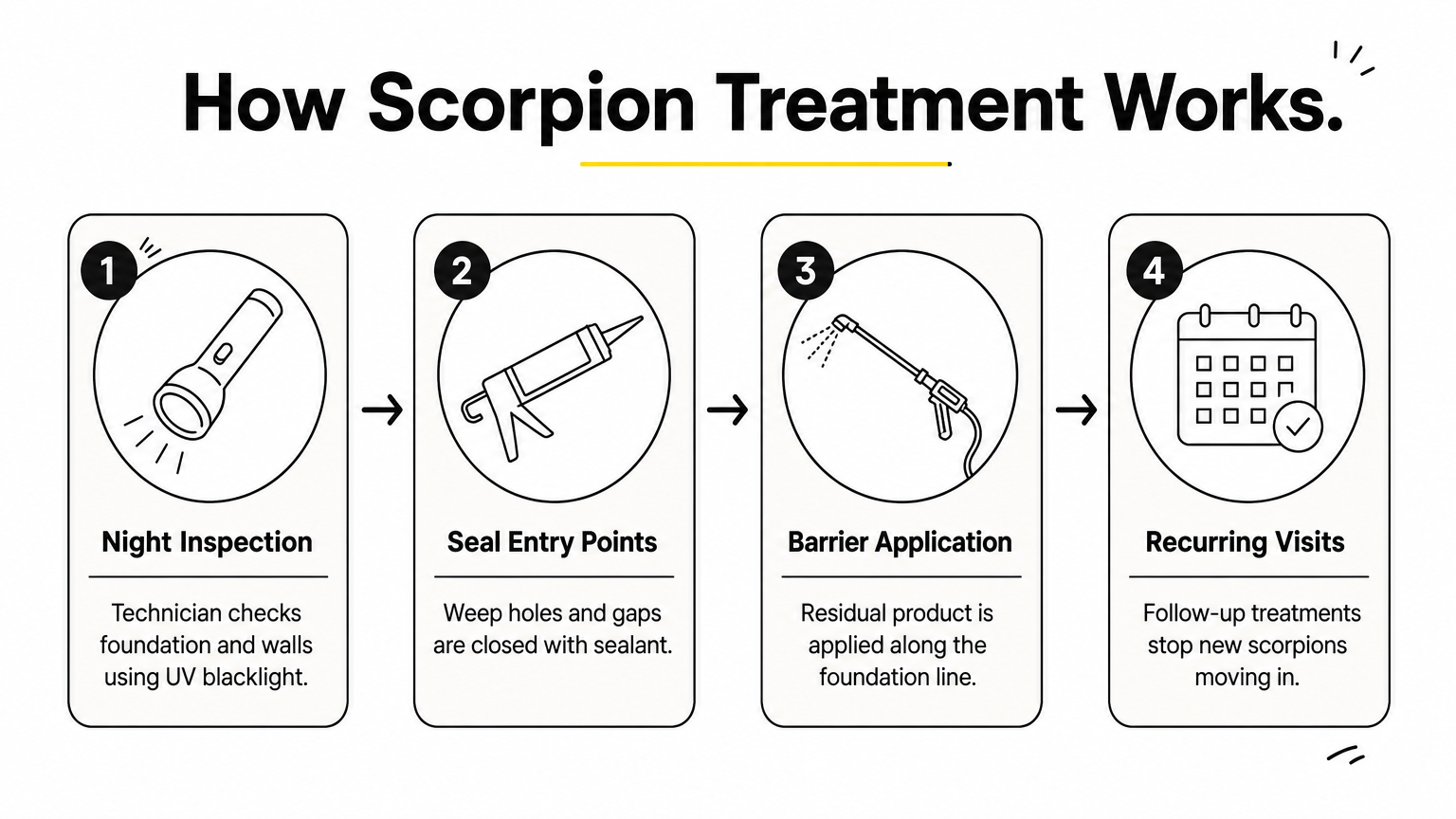
Work here focuses on exclusion and residual barrier treatment rather than a quick spray, since scorpions build up resistance to weak formulas fast. Technicians seal weep holes, expansion joints, and gaps around plumbing penetrations, then apply a residual product along the foundation that keeps working for weeks. Some providers add UV blacklight inspections at night, since scorpions glow under UV light and that's often the only way to confirm how bad an infestation actually is. Desert pest work sometimes extends to solifugids (camel spiders) and centipedes too, since they share the same rocky, dry habitat.
Who it's best for
Homeowners near desert washes, rock landscaping, or block wall fencing deal with the heaviest scorpion pressure and benefit most from this specialty. Families with small children or pets also prioritize it, since a sting sends a lot of people to urgent care every summer.
Scorpions don't respond to a one-time spray, they respond to sealing entry points and reapplying barrier treatment on a schedule.
Typical pricing
Initial scorpion treatment typically runs $150 to $400 , with monthly or bimonthly maintenance visits priced closer to $50 to $90 depending on property size and how many entry points need ongoing attention.
What to expect from service
A technician inspects the foundation, block walls, and landscaping first, often with a UV light at dusk. Sealing and barrier application follow, and most providers recommend recurring visits since new scorpions keep moving in from surrounding desert. Polite Pest Co.'s scorpion prevention and sealing service builds this exact approach into its recurring plans for Mesa and Phoenix properties.
8. Eco-friendly and green pest control companies
Some households can't use conventional pesticides at all. A toddler crawling on the floor, a cat that licks everything, or someone with chemical sensitivities changes what treatment options make sense. Eco-friendly and green pest control companies built their whole approach around this need, using products and methods that skip the harsh synthetic chemicals standard exterminators rely on.
What they specialize in
These providers lean on botanical and mineral-based products instead of standard pesticides, things like essential oil formulations, diatomaceous earth, and bait stations that target specific pests without broadcasting chemicals across the whole yard. Treatment for ants and roaches often relies on desiccant dusts that dehydrate insects rather than poison them, and outdoor work favors targeted spot treatment over blanket spraying. Coverage typically includes the same common pests as general providers, ants, spiders, roaches, but rarely extends to termites or bed bugs, where green-only methods usually can't match a conventional treatment's effectiveness.
Who it's best for
Households with young kids or pets that spend time on treated surfaces fit this category best, along with anyone managing allergies or chemical sensitivities that make standard pesticide application a problem. Renters in properties where the landlord restricts chemical treatment also land here, and so do homeowners who simply prefer a lighter environmental footprint even if it means slightly less aggressive treatment.
Green pest control trades some treatment strength for safety around kids and pets, and for a lot of households that trade is worth it.
Typical pricing
Expect to pay $60 to $120 per visit , running somewhat higher than conventional general pest control because botanical products cost more and often need reapplication sooner.
What to expect from service
A technician walks the property identifying entry points and applies plant-based or mineral treatments along the perimeter and any active problem areas. Results take a little longer to show than conventional pesticides, so don't expect an overnight fix. Recurring visits matter more here than with standard treatment, since these products break down faster in Arizona heat and sun exposure.
9. Common questions about local pest control
Searching for pest insect control near me usually raises a few follow-up questions before you actually book anyone. Below are the ones homeowners in Mesa, Chandler, and Gilbert ask most often when comparing local exterminators.
How fast can a local exterminator come out?
Most companies on this list offer same-week scheduling, and several provide same-day service for urgent issues like scorpions in a bathroom or a bee swarm near an entryway. Routine general pest visits usually book within two to three days, though termite inspections tied to a home sale often need faster turnaround, so mention your timeline when you call.
Is a one-time treatment enough, or do I need a recurring plan?
One-time treatments handle isolated incidents, but anything involving scorpions, ants, or German roaches tends to come back within weeks without a follow-up schedule. Recurring plans exist because Arizona's climate keeps producing new pests from surrounding desert, not because a technician missed something the first time.
A single treatment kills what's there today, but only a recurring plan stops what moves in next month.
What should I ask before hiring an exterminator near me?
Ask about treatment methods , callback guarantees, and whether pricing is based on square footage or a flat rate. A company that can't explain what product it's using or why should raise a flag, especially if pets or kids are in the home.
Do I need separate companies for termites, scorpions, and everyday bugs?
Not necessarily. Full-service providers like Polite Pest Co. cover general pests, termites, scorpions, and more under one recurring plan, which saves you from coordinating separate appointments and separate invoices for problems that often overlap on the same property anyway.
Finding the right fit for your home
Matching the right specialist to your actual problem beats picking the first name that shows up when you search pest insect control near me . A scorpion barrier treatment won't touch a termite colony, and a general perimeter spray won't stop bed bugs hiding in mattress seams. Knowing which category fits your situation saves you from paying for the wrong service twice.
Owners juggling scorpions in the garage, ants in the kitchen, and a termite report before closing on a house don't need three separate vendors. One recurring plan built around your property's actual risk factors handles all of it, and that's exactly the approach that's worked for East Valley homes for over a decade. If you're ready to stop guessing which specialist to call, request a free pest control estimate in Mesa and get a plan built around what's actually happening at your address.